
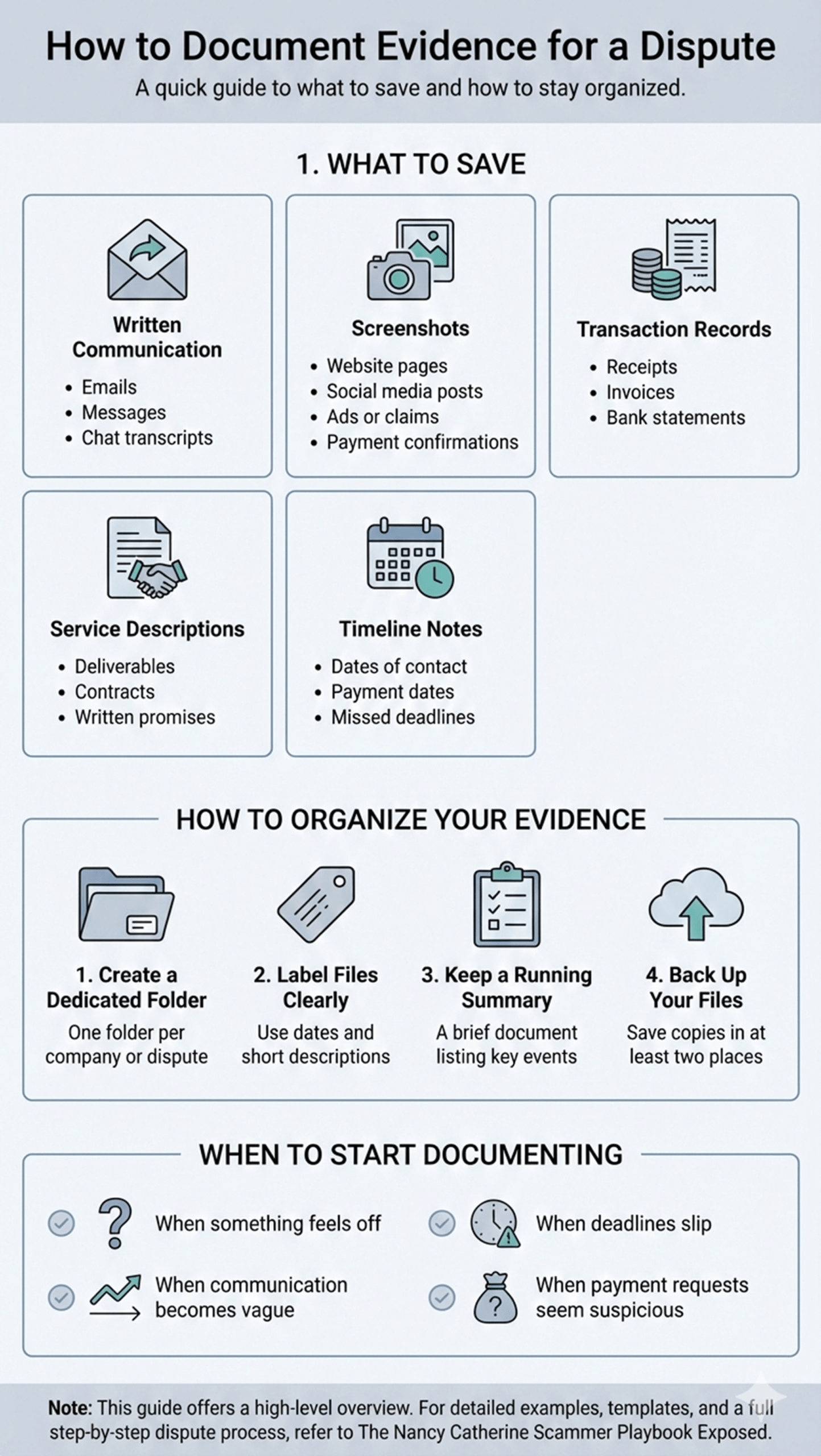
How to Document Evidence for a Dispute
When dealing with a suspicious marketing offer or a potential scam, proper documentation is one of your strongest protections. This quick guide outlines what to save and how to organize it so you’re prepared if you need to file a dispute with your bank, payment provider, or a platform. These points offer a high‑level overview; the full step‑by‑step process, examples, and dispute strategies appear in The Nancy Catherine Scammer Playbook Exposed.
What to Save
Written Communication
- Emails
- Direct messages
- Texts
- Chat transcripts
Screenshots
- Website pages
- Social media posts
- Ads or promotional cla ms
- Payment confirmations
Transaction Records
- Receipts
- Invoices
- Bank statements showing charges
- Any refund attempts
Service Descriptions
- Screenshots of deliverables
- Copies of contracts or agreements
- Any written promises or guarantees
Timeline Notes
- Dates of contact
- Dates of payments
- Dates of missed deliverables
- Any escalation attempts
How to Organize Your Evidence
Create a Dedicated Folder
- One folder per company or dispute
- Subfolders for emails, screenshots, and documents
Label Files Clearly
- Use dates and short descriptions
- Example: “2025‑03‑12_OfferDetails.png”
Keep a Running Summary
- A short document listing key events
- Helps you stay clear and consistent
Back Up Your Files
- Save copies in at least two places
- Cloud storage is ideal
When to Start Documenting
- As soon as something feels off
- When communication becomes vague
- When deadlines are missed
- When payment requests become suspicious
For a deeper look at how to prepare a dispute — including real examples, templates, and a detailed step‑by‑step process — see The Nancy Catherine Scammer Playbook Exposed.