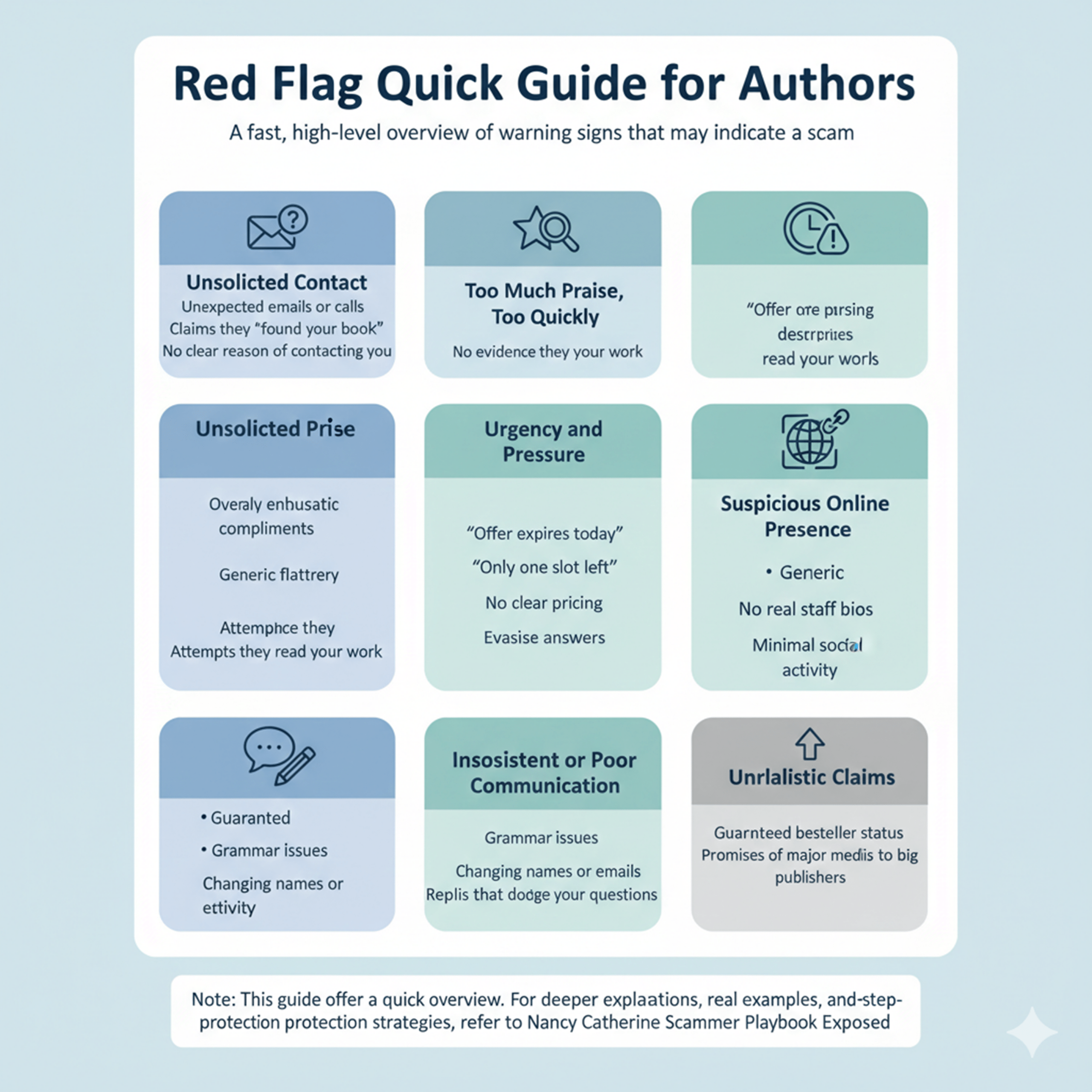
Red Flag Quick Guide
Scammers often reveal themselves through subtle warning signs. This quick guide highlights common red flags authors should watch for when approached with marketing offers, publishing services, or unsolicited opportunities. These points offer a surface‑level overview; the full explanations, examples, and case studies appear in The Nancy Catherine Scammer Playbook Exposed.
Red Flag Categories
Unsolicited Contact
- You receive an unexpected email, call, or message
- The sender claims they “found your book” or “selected you”
- No clear reason why they contacted you specifically
Too Much Praise, Too Quickly
- Overly enthusiastic compliments
- Claims your book is “perfect” for their program
- No evidence they actually read your work
Urgency and Pressure
- “This offer expires today”
- “We only have one slot left”
- Attempts to rush you into a decision
Lack of Transparency
- Vague descriptions of services
- No clear pricing or deliverables
- Evasive answers to direct questions
Suspicious Online Presence
- Website with generic stock photos
- No real staff bios or company history
- Social media accounts with little activity
Inconsistent or Poor Communication
- Grammar issues or awkward phrasing
- Changing names, titles, or email addresses
- Replies that don’t address your questions
Unrealistic Claims
- Guaranteed bestseller status
- Promises of major media coverage
- Claims of direct access to big publishers or Hollywood
What To Do When You Spot a Red Flag
- Pause and avoid responding immediately
- Research the company independently
- Compare their claims to known scam patterns
- Ask for everything in writing
- Seek advice from other authors or support groups
For a deeper look at how scammers use these red flags — including real examples, escalation patterns, and step‑by‑step protection strategies — see The Nancy Catherine Scammer Playbook Exposed.
Download a free sample from the book.