Scam Watch: Protecting Indie Authors From Predatory Scammers
Real scam emails. Real breakdowns. Real protection for authors.
Every day, scammers target independent authors with fake opportunities, impersonated brands, phishing emails, paid‑review traps, and algorithm‑panic schemes designed to drain your wallet and compromise your accounts. Scam Watch exposes these tactics, documents real scam attempts, and gives authors the tools to stay safe.
What Scam Watch Is
Scam Watch is a dedicated investigative resource for indie authors. We analyze real scam emails, social media messages, and impersonation attempts submitted by authors across the writing community. Each case file includes:
- The original scam message (redacted for safety)
- A breakdown of the tactics used
- Red flags to watch for
- How the scammer profits
- How to report, block, and avoid similar attacks
Our mission: Expose the scammer playbook so authors can publish with confidence.
How We Investigate Scams
Scam Watch uses a consistent, evidence‑based review process:
- Source verification — checking sender identity, domain age, hosting, impersonation patterns
- Tactic analysis — identifying psychological hooks, pressure tactics, financial triggers
- Cross‑referencing — comparing with known scammer databases and past case files
- Risk scoring — evaluating phishing, malware, financial fraud, or data harvesting
- Author‑safe recommendations — clear steps to protect your accounts and books
This ensures every Scam Watch alert is accurate, actionable, and trustworthy.
Fake Literary Agents
Scammers impersonate real agents or invent fake agencies to lure authors into paying “submission fees,” “evaluation fees,” or bogus representation costs. Learn how to verify real agents and avoid impersonators.
Book‑to‑Film Scams
Fraudulent “producers” and fake studios promise film adaptations, Netflix deals, or screenplay packages—always for an upfront fee. See how these scams work and how to spot real industry professionals.

Marketing & Promotion Scams
Paid review mills, fake reader communities, algorithm‑panic traps, and worthless promo packages target authors seeking visibility. Learn which services are legitimate—and which are pure fraud.
Impersonation Scams
Scammers pose as real authors, editors, celebrities, or publishing professionals to gain trust and extract money or personal data. See how impersonation works and how to verify identities.
Social Media Scams
Fake Facebook groups, LinkedIn recruiters, Twitter/X phishing, and DM‑based scams are increasingly common. Learn how scammers weaponize social platforms to target authors.
Scam Psychology & Awareness
Understand the psychological tactics scammers use—urgency, flattery, authority, fear, and scarcity. Recognizing these patterns is the strongest defense against fraud.
AI‑Generated Personas
Scammers now use AI‑generated headshots, bios, and fake editorial teams to appear credible. Learn how to spot synthetic identities and protect yourself from AI‑driven deception.
Contract Scams
Fraudulent contracts hide predatory clauses, rights grabs, or payment traps. Learn how to identify red flags in publishing, marketing, and adaptation agreements.
Digital Safety & Data Protection
Protect your accounts, devices, and personal information from data leaks, password attacks, and digital exploitation. Includes guides for safe browsing and account security.
Email Scams & Phishing Attempts
Phishing attempts, fake opportunities, malware links, and impersonated brands often arrive via email. See real examples and learn how to analyze suspicious messages safely.

Fake Editors & Book Coaches
Scammers pose as editors or coaches using fake credentials, AI‑generated personas, and fabricated testimonials. Learn how to verify real professionals and avoid costly fraud.
Fake Publishers
Scammers create fake publishing houses or impersonate real ones to sell overpriced “publishing packages” or steal manuscripts. Learn how to verify legitimate publishers.
Latest Scam Alerts
Why Scammers Love Cryptocurrency to Target Authors: An Inside Look
Hey there, fellow authors, freelancers, and creatives—if you’ve gotten emails promising big advances via ‘crypto payments,’ you’re not alone. Crypto’s appeal to scammers is simple: it’s fast, borderless, irreversible, and pseudonymous. No chargebacks, no banks to flag fraud—perfect for vanishing acts. This post breaks down the scam playbook, from the initial hook to the ghosting vanish, key red flags like vague communication and pressure tactics, real-life scenarios, and actionable steps to verify legitimacy and protect yourself. Knowledge is your best defense—scammers are the villains, not you.
Beware the Fake Literary Agent: Protecting Your Manuscript from Impersonators
As authors, we pour our hearts into our stories, dreaming of that magical moment when a literary agent discovers our work and propels it toward publication. But scammers know this dream all too well—and they’re weaponizing it by impersonating legitimate agencies. At Authors Against Scammers, we’re here to arm you with knowledge so you can chase your goals confidently, without falling prey to fraud.
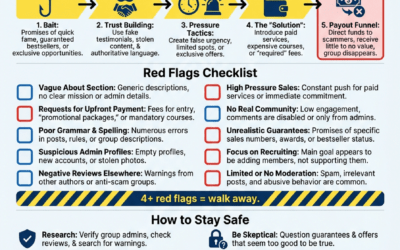
Spotting Fake Facebook Author Groups: Your Due Diligence Guide
39K members? Generic descriptions? Spot fake author groups before scammers steal your manuscript and money. Free checklist download.
Explore Scam Categories
Resources for Authors
REPORT A SCAM (CTA)
Have you received a suspicious email, message, or offer? Submit it anonymously to help protect other authors.
Frequently Asked Questions
1. How do I know if a publishing offer is legitimate?
Legitimate publishers never cold‑contact authors with guaranteed deals, paid “evaluation packages,” or urgent deadlines. A real publisher will have a verifiable website, staff directory, submission guidelines, and a track record of published books. If someone reaches out unexpectedly, always verify their identity before responding.
2. Why do scammers target authors specifically?
Authors are attractive targets because they’re passionate about their work, often unfamiliar with industry norms, and eager for opportunities. Scammers exploit this by offering fake representation, film deals, marketing packages, or editing services that sound credible but are designed to extract money or personal information.
3. What are the biggest red flags in a scam email or message?
Common red flags include: unsolicited offers, generic greetings, pressure to act quickly, upfront fees, unverifiable credentials, fake testimonials, and communication from free email accounts. If the message feels “off,” it usually is.
4. How can I verify whether a literary agent or editor is real?
Check their name against reputable industry directories, agency websites, LinkedIn profiles, and verified social media accounts. Real professionals have a traceable history, client lists, and published work. If you can’t confirm their identity through independent sources, treat the offer as suspicious.
5. Are film adaptation offers ever real?
Yes — but they never begin with cold emails, WhatsApp messages, or Facebook DMs. Real producers work through agents, managers, or established industry channels. If someone claims to represent Netflix, Disney, or a major studio, verify their identity through official corporate directories before engaging.
6. What should I do if I think I’ve been targeted by a scammer?
Stop responding immediately, document all communication, and report the scam to the appropriate authorities or platforms. You can also submit the case to Scam Watch for analysis. Never send money, personal information, or manuscripts until you’ve confirmed legitimacy.
7. How do scammers use AI‑generated personas?
Scammers now create entire fake identities using AI‑generated headshots, fabricated bios, and synthetic editorial teams. These personas look professional but have no real‑world presence. Reverse‑image searches and credential checks can help expose them.
8. What’s the safest way to protect my digital accounts?
Use strong, unique passwords, enable two‑factor authentication, avoid clicking unknown links, and regularly check whether your data has been exposed in breaches. Scammers often rely on weak digital security to gain access to email, social media, and cloud accounts.
9. Why do scammers ask for upfront fees?
Upfront fees are the fastest way for scammers to profit. They disguise these fees as “evaluation,” “promotion,” “distribution,” or “processing” costs. Legitimate agents, editors, and publishers do not charge upfront for representation or consideration.
10. Can scammers impersonate real companies or professionals?
Yes — impersonation is one of the most common tactics. Scammers copy logos, names, and even staff photos from real companies to appear credible. Always verify contact information through official websites, not through links provided in unsolicited messages.