
Protect Yourself with Our Essential Scam Detection Guide
Scammers targeting authors use predictable patterns. This quick checklist highlights the most common warning signs so you can pause, assess, and protect yourself. These points offer a high‑level overview; the full breakdown of tactics, examples, and case studies appears in The Nancy Catherine Scammer Playbook Exposed.
Vague or Overblown Promises
- Claims of “guaranteed” success
- No specifics about deliverables
- Pressure to act fast
Unverifiable Credentials
- No real company history
- Fake or recycled testimonials
- No traceable staff or leadership
Unclear Pricing or Hidden Fees
- Prices that change mid‑conversation
- “Special discounts” that expire instantly
- No written contract or scope of work
Poor Communication Patterns
- Generic emails with no personalization
- Broken English or inconsistent tone
- Refusal to answer direct questions
Suspicious Payment Requests
- Demands for upfront payment
- Requests for wire transfers, Zelle, or crypto
- No secure payment portal
Pressure Tactics
- “This offer is only available today”
- “We’ve chosen you for a special opportunity”
- Attempts to create urgency or fear
Too‑Good‑To‑Be‑True Marketing Claims
- “We guarantee bestseller status”
- “We work directly with major publishers”
- “We can get you into bookstores nationwide”
What To Do If You Spot a Red Flag
- Pause and step back
- Ask for everything in writing
- Research the company independently
- Compare their claims to known scam patterns
- Talk to other authors or support groups
For a deeper look at how scammers operate — including real examples, scripts, escalation patterns, and step‑by‑step protection strategies — see The Nancy Catherine Scammer Playbook Exposed. The book expands on each item in this checklist with detailed guidance.
Download a free sample from the book.
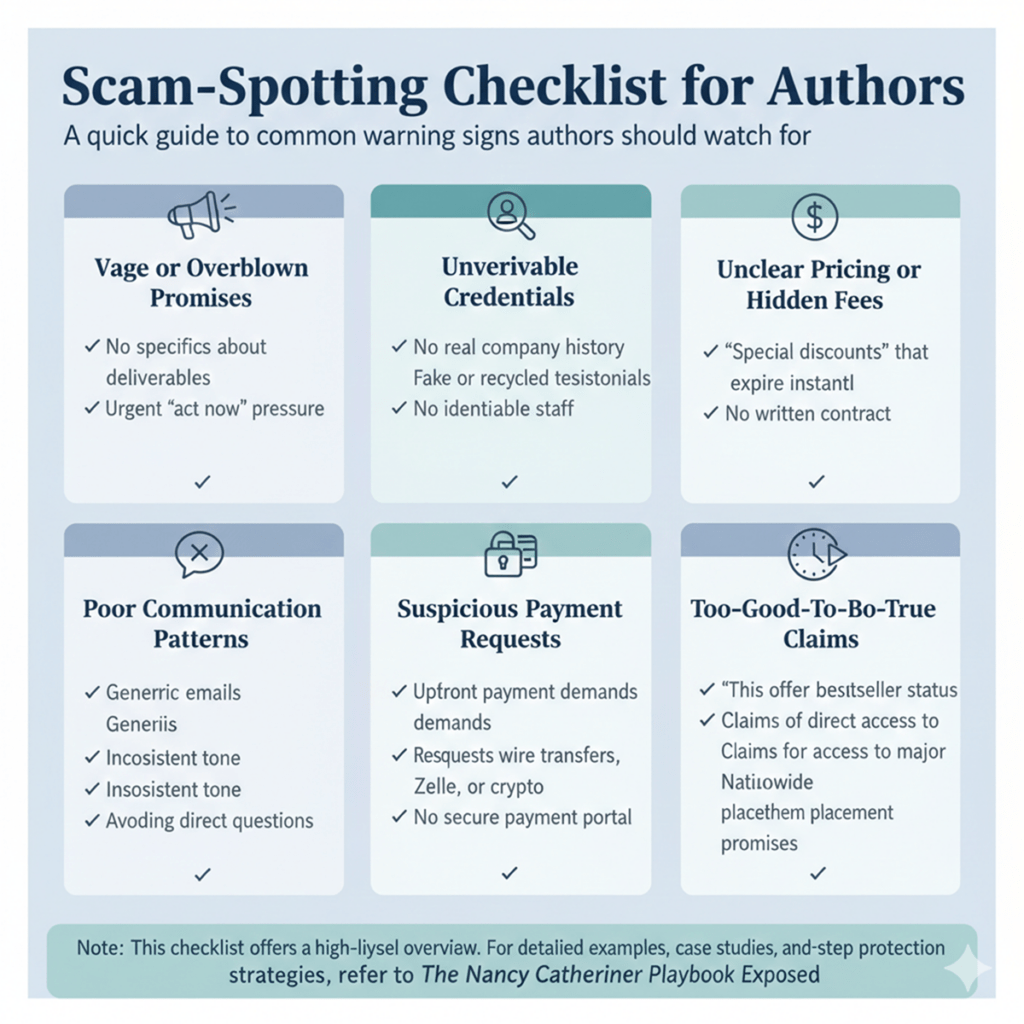
Infographic listing scam‑spotting red flags for authors, including vague promises, unverifiable credentials, unclear pricing or hidden fees, poor communication patterns, suspicious payment requests such as wire transfers or crypto, and too‑good‑to‑be‑true claims like guaranteed bestseller status or major publisher access.