Website hacking isn’t just something that happens to big corporations, hospitals, or government agencies. Small websites—including author sites—can and do get compromised. While full‑blown ransom attacks aren’t the most common scam authors face, they’re real enough to deserve attention, especially for indie writers who maintain their own sites.
This guide breaks down what website ransom scams look like, why authors are vulnerable, and how you can protect your online presence without fear or technical overwhelm.
Why Website Ransom Scams Matter to Authors?
Most authors rely on their websites for essential parts of their business:
- Showcasing books and series
- Hosting newsletters and reader magnets
- Running blogs
- Selling books directly
- Building email lists
- Maintaining professional credibility
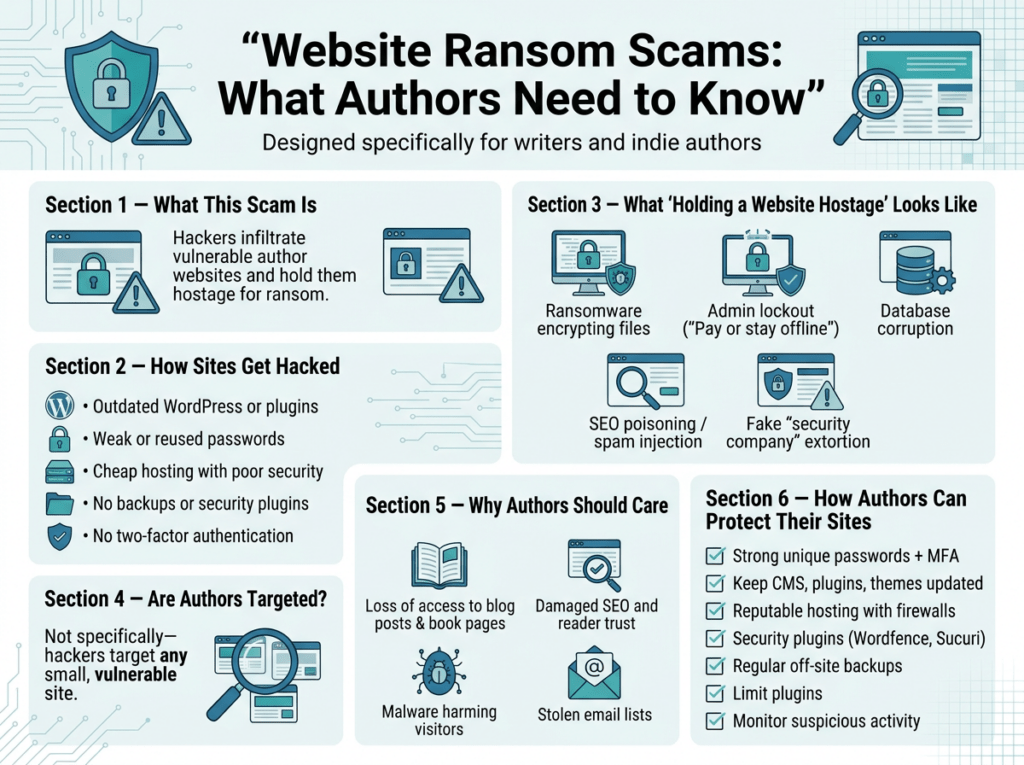
A compromised site can lead to:
- Lost access to your content
- Damaged SEO and search rankings
- Reader distrust
- Malware being spread to your visitors
- Stolen email lists or personal data
- Downtime that affects sales and visibility
Even if you’re not “famous,” your site is still a target—because scammers don’t attack people, they attack vulnerabilities.
Do Scammers Really Hold Author Websites for Ransom?
Yes—but not because you’re an author.
Hackers scan the internet for weak websites. If yours happens to be one of them, you’re simply caught in the net.
Most author sites run on platforms like:
- WordPress
- Wix
- Squarespace
- GoDaddy site builders
These platforms are safe if they’re maintained. But many authors unintentionally create openings for attackers by:
- Skipping updates
- Using weak or reused passwords
- Installing outdated plugins
- Relying on cheap hosting with poor security
- Forgetting backups
- Not using two‑factor authentication
Once a hacker gets in, the attack is opportunistic—not personal.
What “Holding a Website Hostage” Actually Looks Like
Website ransomware scams come in several forms. Here are the most common ones authors encounter:
- Ransomware on Your Hosting Account
Your files or database get encrypted. The attacker demands Bitcoin to unlock them.
- Admin Lockout
They change your login credentials and email you:
“Pay $300 or your site stays offline.”
- Database Corruption
Your posts, pages, or store data get scrambled or deleted. The attacker offers to “restore” them—for a fee.
- SEO Poisoning
Your site has been injected with spam links, redirects, or malware. They demand payment to remove the damage.
- Fake “Security Company” Extortion
A scammer hacks your site, then contacts you pretending to be a security service offering to fix the breach. This one does target authors occasionally because scammers know many writers lack technical support.
Are Authors Specifically Targeted?
No. This is similar to sextortion scams—authors aren’t targeted because of their profession. They’re targeted because:
- They run small websites
- They often lack advanced security knowledge
- They may not have a dedicated tech person
- Their sites are easier to breach than corporate ones
Hackers target:
- Small businesses
- Personal blogs
- Hobby sites
- Any site with weak security
Authors simply fall into that category.
Should Authors Be Worried?
Be aware—not afraid. Website ransomware attacks are real, but they’re preventable with basic digital hygiene.
The biggest risk factors are:
- Outdated WordPress installations
- Abandoned plugins
- Cheap hosting
- Reused passwords
- No backups
- No security plugin
- No two‑factor authentication
If your site is well-maintained, your risk drops dramatically.
How Authors Can Protect Their Websites (Practical Steps)
These are simple, high‑impact actions every author can take:
- Use strong, unique passwords and multi – factor authentication
- Keep everything updated (CMS, plugins, themes, hosting)
- Choose reputable hosting with built‑in security
- Install security plugins (Wordfence, Sucuri, iThemes Security)
- Limit plugins and avoid abandoned ones
- Run regular backups (preferably off‑site)
- Monitor for suspicious activity
- Avoid cheap hosting that lacks firewalls or malware scanning
Good security hygiene makes website ransomware attacks highly unlikely.
Final Takeaway
Website ransom scams aren’t the most common threat authors face—but they’re real enough to deserve attention. With a few simple precautions, you can protect your author site, safeguard your readers, and keep your online presence secure.
Your website is part of your author business. Treating it with the same care you give your manuscripts ensures scammers never get the chance to hold it hostage.

Rae Stonehouse is a Canadian author, publisher, and advocate committed to exposing publishing scams and supporting writers through education and community. As the creator of Authors Against Scammers, Rae provides clear, practical guidance to help writers protect their work, their money, and their peace of mind. His books and resources reflect a lifelong dedication to empowering others through knowledge, clarity, and real‑world experience.