Summary
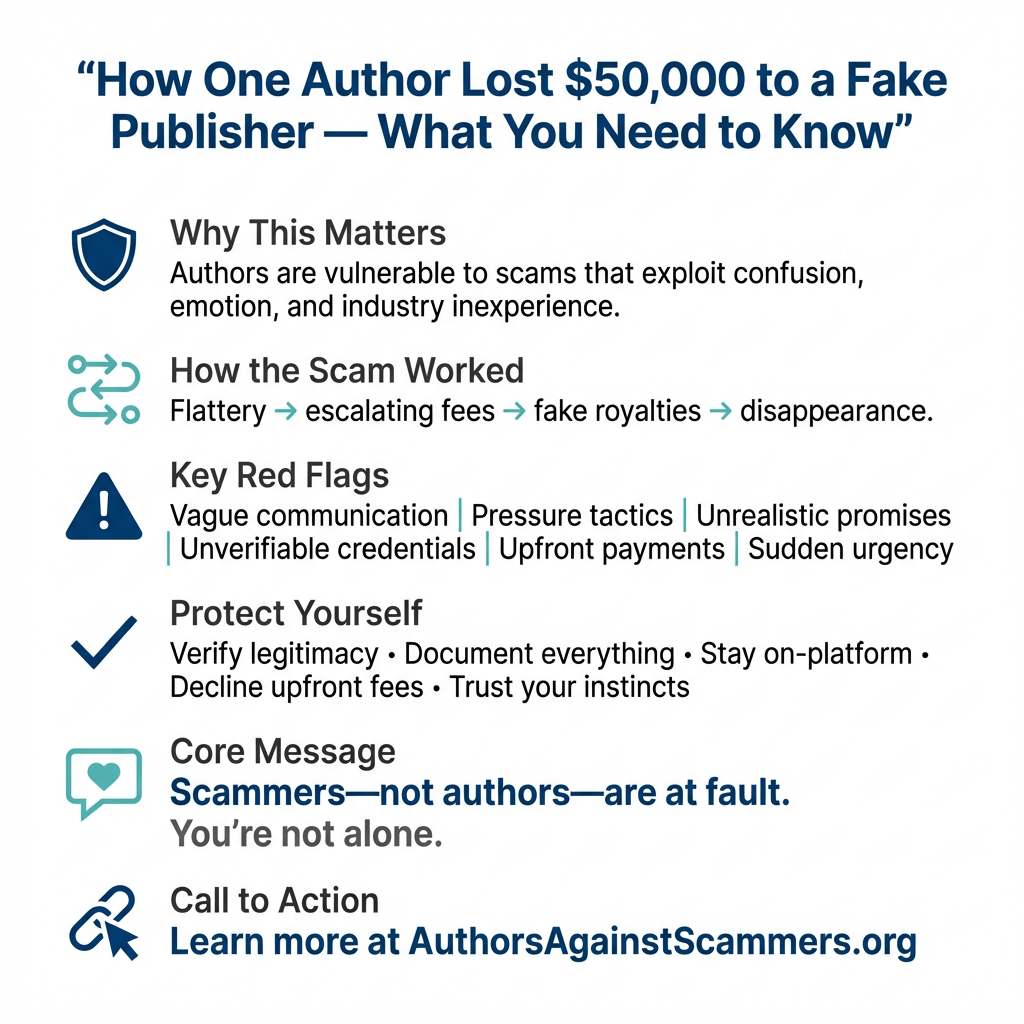
An author lost $50,000 to a fraudulent publisher that operated under a polished brand with professional-sounding emails and fabricated royalty reports. The scammer used flattery, authority claims, urgency, and escalating fees (processing, layout, distribution, marketing, upgrades, and alleged film/bestseller packages) before communication ceased, emails bounced, phone numbers disconnected, and the website vanished. This case highlights how authors can be targeted through emotional manipulation and invented industry practices.
Scam Type
Fake Publisher / Vanity Press (with Fake Marketing Offer and fabricated royalty elements)
Incident Description
The scammer contacted the author with a polished pitch claiming they loved the book, wanted to publish it internationally, and could guarantee major distribution. The email and website appeared professional, with fabricated testimonials. Trust was built using reciprocity (offering “free” services), authority (claiming ties to major retailers), scarcity (“We only accept a few authors each quarter”), and social proof (fake reviews and success stories). The author was then asked for a series of fees: a small “processing fee,” followed by a “layout fee,” “distribution fee,” and “marketing package.” Once financially invested, the scammer escalated with claims that the book was performing well and recommended upgrades, a film adaptation meeting, and a guarantee of bestseller status with one final payment. Fabricated royalty statements showing impressive sales were sent to reinforce the illusion. Eventually, communication slowed, emails bounced, phone numbers disconnected, and the website vanished. The author realized it had all been a scam.
Evidence / Excerpts
Quoted pitch language from the scammer:
- “We love your book.”
- “We want to publish it internationally.”
- “We can guarantee major distribution.”
- “Your book is performing well—we recommend upgrading your package.”
- “We can secure a film adaptation meeting.”
- “We can guarantee bestseller status with one final payment.”
- “This offer expires today!” (general urgency tactic referenced)
- “We only accept a few authors each quarter.”
Fabricated royalty reports showing impressive sales were sent (no actual report text or screenshots provided in the source). Website, emails, and testimonials were described as appearing professional but later vanished or were fabricated. No additional screenshots, contracts, or specific documents were included.
Red Flags
- Vague communication with no specifics about the book.
- Pressure tactics and sudden urgency (“Act now or lose your chance!”).
- Unrealistic promises (guaranteed bestseller status, film deals, bookstore placement, major distribution).
- Unverifiable credentials (no LinkedIn presence, no staff bios, no real address).
- Requests for upfront payment for anything labeled “mandatory” (processing, layout, distribution, marketing, and upgrade fees).
- Fake royalty reports or unverifiable sales claims.
- Off-platform communication potential (though not explicitly confirmed in this incident).
- Multiple fees that seemed reasonable individually but added up significantly.
If several of these appear together, disengage immediately.
Scammer Method & Tactics
The scammer combined flattery (“Your book is incredible—we want to publish it immediately!”), authority theater (fake credentials, fake staff, fake offices, claimed retailer ties), urgency, and complexity (invented fees and confusing royalty structures). Psychological tactics included reciprocity, scarcity, and social proof. Fees started small and escalated once the author was invested, using sunk-cost pressure. Fabricated royalty statements maintained the illusion of success until the operation collapsed (communication ceased and digital presence disappeared).
Risk Level
High
Recommended Action for Authors
- Verify legitimacy before signing or paying: Google the company name + “scam”; check LinkedIn for real staff; look for and verify a physical address; search Writer Beware, ALLi, and Authors Against Scammers; ask for and actually contact references. Legitimate professionals welcome scrutiny.
- Document everything: screenshot emails/messages/profiles; save contracts and invoices; record dates and payment amounts.
- Respond safely: stay on the original platform; ask clarifying questions; decline upfront “mandatory” fees; request website, contract, and references. Scammers often disappear when challenged.
- Avoid: sending personal information; paying for “mandatory” services; clicking suspicious links; moving to WhatsApp/Telegram/personal Gmail; rushing decisions. Real opportunities do not expire overnight.
- Protect yourself going forward: learn standard publishing timelines and practices; join reputable writing communities; follow scam-alert accounts; use email filters and DM restrictions; trust your instincts.
Falling for a scam does not mean the author is naïve—the fault lies with the scammer.
Status (Active / Resolved)
Resolved (for this specific incident: communication ceased, website vanished, and the author recognized it as a scam). Broader scam type remains a known risk.
Source: https://authorsagainstscammers.org/2026/03/27/how-one-author-lost-50000-to-a-fake-publisher/

Rae Stonehouse is a Canadian author, publisher, and advocate committed to exposing publishing scams and supporting writers through education and community. As the creator of Authors Against Scammers, Rae provides clear, practical guidance to help writers protect their work, their money, and their peace of mind. His books and resources reflect a lifelong dedication to empowering others through knowledge, clarity, and real‑world experience.