What Romance Scams Teach Us About Publishing Scams
As authors, we pour our hearts into our stories, dreaming of the day our words connect with readers worldwide. But scammers know this passion all too well—and they exploit it ruthlessly. By drawing parallels between romance scams and publishing scams, we uncover timeless tactics that prey on hope and trust. This isn’t about pointing fingers; it’s about arming you with knowledge. Romance scams, which cost victims billions annually according to the FTC, mirror publishing scams step-by-step. Understanding one equips you to spot the other. You’re not alone in this—scammers are the villains here, and together, we’re building defenses.
Why This Matters: Protecting Dreamers in a Vulnerable Industry
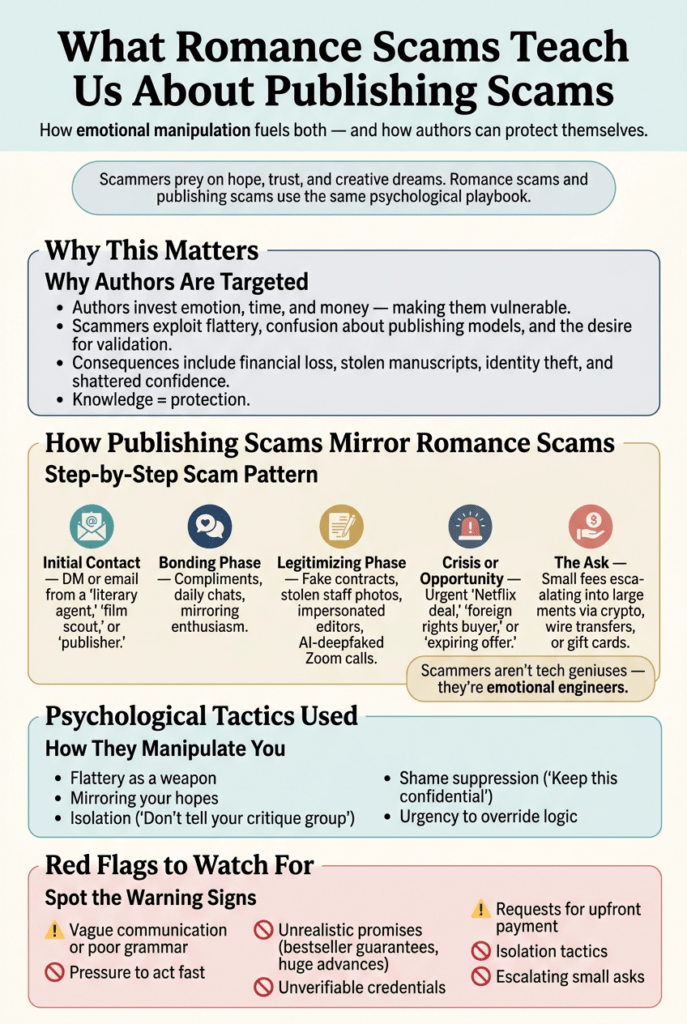
Authors, freelancers, and creatives are prime targets because their work is personal. We’ve invested time, emotion, and often savings into our craft, leaving us open to those who dangle validation. Scammers thrive on industry confusion—self-publishing platforms, agents, hybrid models—and our inexperience with “big opportunities.” They exploit flattery (“Your manuscript is a bestseller waiting to happen!”) much like romance scammers whisper sweet nothings.
The fallout is real: drained bank accounts, stolen manuscripts, shattered confidence, and sometimes identity theft. One author lost $5,000 to a fake agent; another watched their book idea vanish into a scam publisher’s void. But here’s the empowering truth: recognizing these patterns turns vulnerability into strength. Scammers succeed when we stay silent—let’s change that.
How Publishing Scams Mirror Romance Scams: A Step-by-Step Breakdown
Scammers aren’t tech geniuses; they’re emotional engineers. Romance scams build fake love; publishing scams build fake partnerships. Both weaponize your dreams using identical psychology. Here’s how it unfolds:
- Initial Contact: A DM, email, or social media message from a “literary agent,” “film scout,” or “foreign publisher.” Like a dating app match, it’s tailored — “I love your genre!”
- Bonding Phase: Daily chats, compliments (“Your voice is unique!”), mirroring your enthusiasm. They share “stories” of past successes, future-faking a blockbuster deal.
- Legitimizing Phase: Fake contracts, stolen photos of “staff,” or impersonated big names (e.g., a “Penguin editor”). Trust rituals like Zoom calls with AI-deepfaked faces seal the illusion.
- Crisis or Opportunity: Urgency hits—”This Netflix deal closes tomorrow!” or “Foreign rights buyer needs fees now.” Echoing romantic pleas like “I’m stranded abroad.”
- The Ask: Starts small ($100 “processing fee”), escalates via foot-in-the-door ($500 “customs,” $2,000 “legal”). Pay via untraceable crypto or gift cards.
Psychological tactics? Flattery as a weapon (praise hits our validation-starved nerves), mirroring (they echo your hopes), isolation (“Don’t tell your critique group—it could leak”), and shame suppression (victims hide to avoid feeling “naive”). Patterns repeat across industries because they work on human nature, not hacks.
Spot the Red Flags: Key Warning Signs in Publishing Scams
Trust your gut—these indicators scream “scam”:
- Vague Communication: Dodgy grammar, generic praise, reluctance to discuss specifics.
- Pressure Tactics and Sudden Urgency: “Act now or lose the deal!” overrides your research instincts.
- Unrealistic Promises: Bestseller guarantees, massive advances without edits, or “exclusive” film rights.
- Unverifiable Credentials: No LinkedIn presence, a website that’s a one-pager, or profiles that don’t Google-reverse-image search clean.
- Requests for Upfront Payment: Legitimate agents/publishers earn from sales, not your wallet. Fees for “editing,” “marketing,” or “rights processing” are huge red flags.
- Isolation Plays: “Keep this confidential—don’t contact my colleagues.”
- Escalation from Small Asks: Tiny fees lead to bigger ones, testing compliance.
If it feels too good, too fast, pause. Real deals build slowly with transparency.
Real-World Scenarios: How These Scams Play Out for Authors
Scenario 1: The “Dream Agent” Trap
Sarah gets a Twitter DM from “Agent Jane Doe,” gushing over her romance WIP. Weeks of chats build rapport—fake testimonials, a polished contract. Then: “Pay $250 for manuscript evaluation to secure your spot.” Sarah sends it; asks escalate to $1,500 for “international filing.” Jane ghosts. Red flag: No agency website, payment via PayPal to a personal account.
Scenario 2: The “Overseas Publisher” Hook
Mike’s sci-fi novel catches a “German publisher’s” eye via email. Bonding over a shared “vision,” they send AI-generated staff pics. “Opportunity: €10,000 advance, but wire $800 for translation rights fees—deal expires Friday!” Mike loses $800. Red flag: Urgency + untraceable bank abroad.
These aren’t “gotcha” tales—they show scammers’ playbook. You didn’t fall for it; pros targeted you.
Practical Steps: Empower Yourself Against Publishing Scams
You’re smarter than scammers. Here’s your action plan:
- Verify Legitimacy: Google names + “scam.” Use QueryTracker, Manuscript Wishlist, or Writer Beware for agents. Reverse-image search photos via Google/TinEye. Call the listed numbers independently.
- Document Everything: Screenshot chats, save emails/contracts. Note dates, amounts—evidence for reports.
- Respond Safely: Don’t engage or argue. Reply once: “Please provide verifiable references.” Then block/report to the FTC (ftc.gov/complaint), IC3 (ic3.gov), or platform (e.g., Twitter).
- What Not to Do: Never send money, share bank information, or sign without a lawyer’s review. Ignore “confidentiality” pleas.
- Future Protection: Join communities like Authors Against Scammers. Use two-factor authentication. Vet offers via #10queries on Twitter. Build a scam-spotting checklist.
Knowledge is your shield—scammers hate informed authors.
You’re Not Alone: Join the Fight Against Scammers
Scammers prey on hope, but they don’t define you. Millions face this; Authors Against Scammers stands with you. Victims aren’t foolish—they’re targeted by experts. Flip the script: share your story (anonymously if needed), educate peers, and reclaim your power.
Ready to stay ahead? Dive deeper into resources at AuthorsAgainstScammers.org — from scam trackers to evaluation guides. Bookmark our latest on emerging tactics, like AI impersonations. Together, we expose these frauds and protect every dreamer’s journey.
Stay vigilant; write boldly.
– The Authors Against Scammers Team

Rae Stonehouse is a Canadian author, publisher, and advocate committed to exposing publishing scams and supporting writers through education and community. As the creator of Authors Against Scammers, Rae provides clear, practical guidance to help writers protect their work, their money, and their peace of mind. His books and resources reflect a lifelong dedication to empowering others through knowledge, clarity, and real‑world experience.