
Authors should treat any unsolicited “spotlight,” “interview,” or “feature” offers with caution — especially when the sender cannot be verified through legitimate channels. Scammers are increasingly using real book clubs, real communities, and real organizationsas camouflage for fraudulent outreach.
This case demonstrates how easily a scammer can impersonate a legitimate group and how important it is to verify identity before engaging.
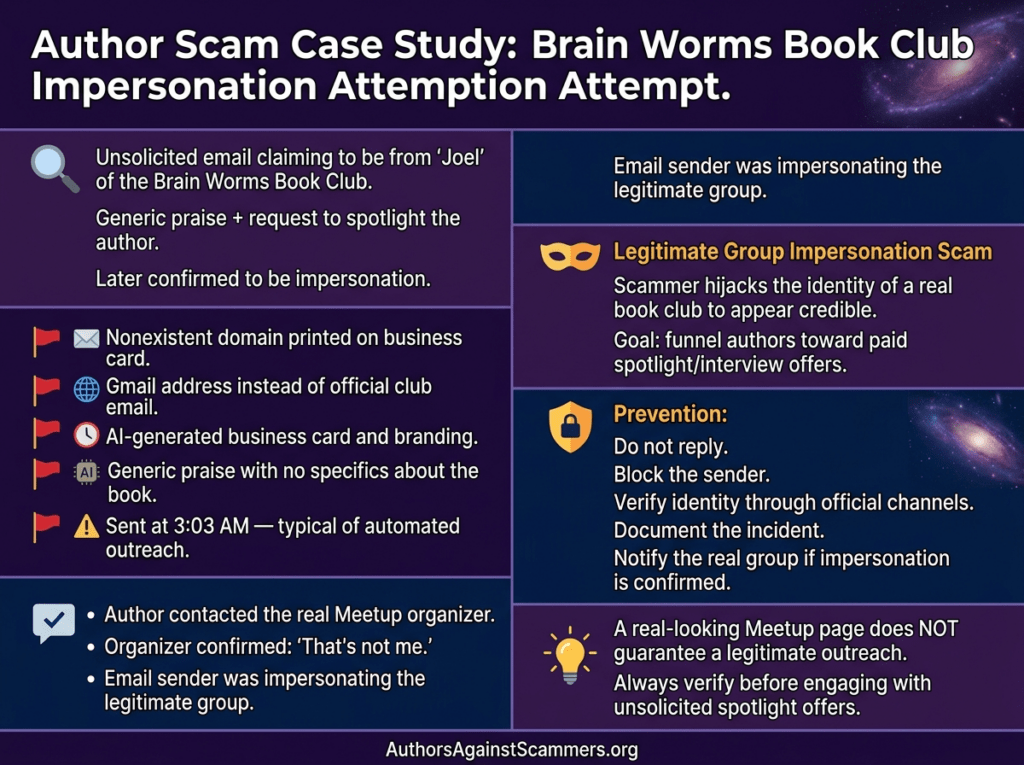
In early September 2026, I received an unsolicited email from someone named Joel, claiming to represent the Brain Worms Book Club. He said he had “recently discovered” my book Shadows and Debts: Tales From the Nexus and wanted to spotlight me in their reading community. The message looked friendly enough, but several red flags appeared immediately — and later verification confirmed that the sender was impersonating a real Meetup group.
This case turned out to be a textbook example of a Legitimate Group Impersonation Scam, a tactic where scammers hijack the identity of an existing book club to appear credible.
The Initial Email
Sender: Joel Email:brainswormsbookclubs@gmail.com
Subject: We’d Love to Spotlight: Rae Stonehouse
Timestamp: 3:03 AM
The email contained generic praise with no specific references to my book’s content. It used vague language about “meaningful discussions” and “learning more about the story behind the book,” but provided no details about the club, its members, or any past author features.

Red Flags I Noticed
1. The Domain Didn’t Exist
The business card listed
brainswormsbookclubs.com , so I checked it. Not only was there no website — the domain isn’t even registered.
A legitimate book club wouldn’t print a non‑existent domain on its promotional material.
2. Gmail Instead of a Real Organizational Email
The sender used a Gmail address rather than a domain‑based email. This mismatch is a classic sign of a fabricated identity.
3. AI‑Generated Branding
The digital business card featured:
-
A cosmic/galaxy background
-
A generic portrait photo
-
Minimal contact details
-
No verifiable history
It looked exactly like the AI‑generated “book club identities” scammers have been using throughout 2025–2026.
4. Generic Praise With No Specifics
The email didn’t reference a single character, theme, or plot point. Just vague compliments pulled from the book description.
5. Odd Send Time
The message arrived at 3:03 AM, consistent with:
-
automated outreach tools
-
international scam operations
-
batch‑sent AI campaigns
Verification: Confirmed Impersonation
Because the Meetup page for the Brain Worms Book Club looked polished, I contacted the organizer directly through Meetup to verify the outreach.
Their response was short and definitive:
“Hey. Sorry. That’s not me. All the best 🙏”
This confirmed that:
-
Joel is not affiliated with the real group
-
The Gmail address is not connected to the club
-
The business card is fabricated
-
The nonexistent domain was part of the deception
-
The email was an unauthorized impersonation of a legitimate Meetup group
This is exactly the pattern seen in modern impersonation scams: Scammers latch onto a real group to appear credible, then run their own fee‑based outreach.
Conclusion
This incident is a clear example of the Book Club Spotlight Scam, specifically the subtype involving impersonation of a legitimate group. The scammer used:
-
A real Meetup group’s name
-
A fake persona
-
A nonexistent domain
-
AI‑generated branding
-
A generic praise email
The goal was not literary engagement — it was to funnel me toward a paid “spotlight” or “interview” offer.
My Response
I did not reply to the scammer. I blocked the sender. I documented the incident for Scamademic and author‑awareness resources. I notified the real Meetup organizer so they are aware of the impersonation.
Takeaway
Authors should treat any unsolicited “spotlight,” “interview,” or “feature” offers with caution — especially when the sender cannot be verified through legitimate channels. Scammers are increasingly using real book clubs, real communities, and real organizationsas camouflage for fraudulent outreach.
This case demonstrates how easily a scammer can impersonate a legitimate group and how important it is to verify identity before engaging.

Rae Stonehouse is a Canadian author, publisher, and advocate committed to exposing publishing scams and supporting writers through education and community. As the creator of Authors Against Scammers, Rae provides clear, practical guidance to help writers protect their work, their money, and their peace of mind. His books and resources reflect a lifelong dedication to empowering others through knowledge, clarity, and real‑world experience.