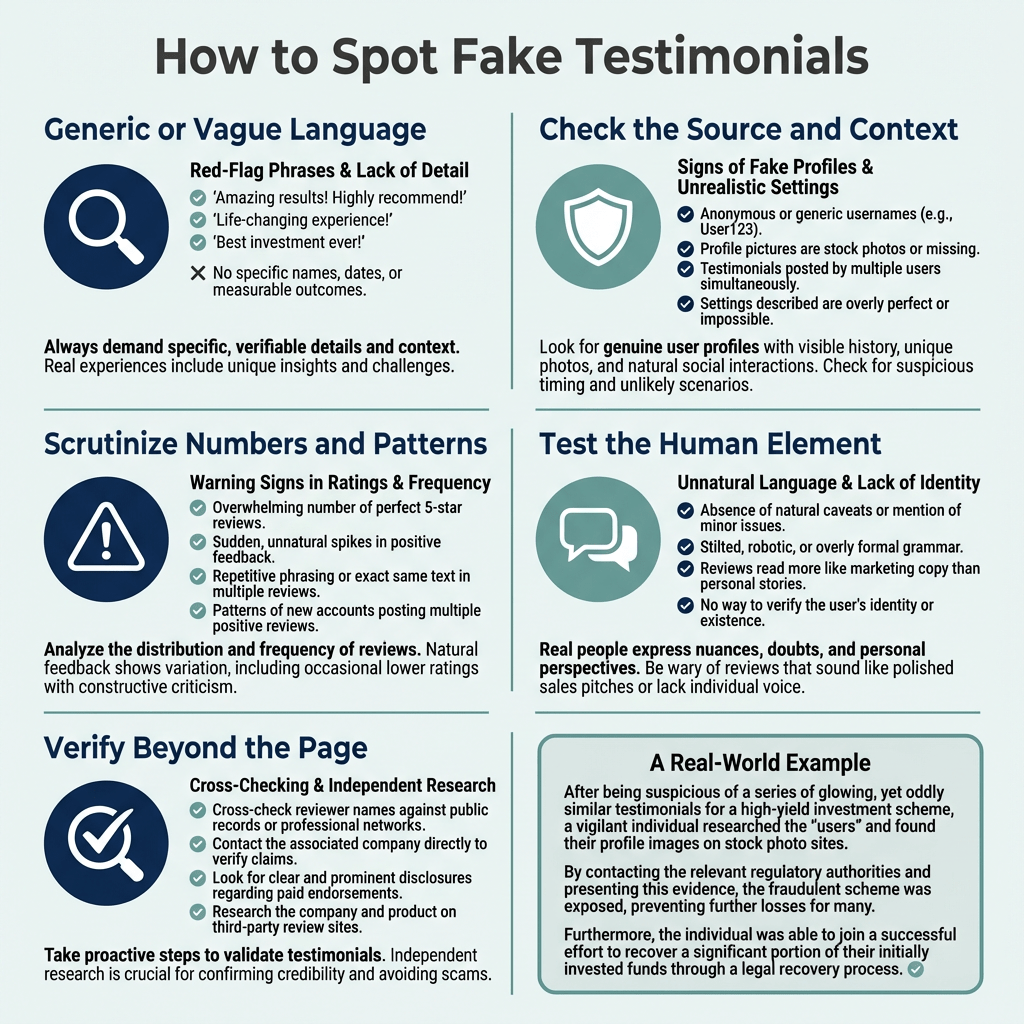
How to Spot Fake Testimonials
In today’s digital marketplace, testimonials are everywhere, shining on websites, popping up in ads, and flooding social media feeds. They’re powerful tools for building trust, but not all that glitters is gold. Fake testimonials, often fabricated by shady marketers or AI bots, can mislead consumers and damage reputations. The good news? With a keen eye and a few simple checks, you can separate the genuine endorsements from the digital smoke and mirrors. Here’s your guide to spotting fakes.
Look for Generic or Vague Language
Real testimonials feel personal and specific, like a conversation with a satisfied customer. Fakes often recycle stock phrases that could apply to anyone.
- Red flags: Words like “amazing,” “life-changing,” or “best ever” without details. Does it say “This product changed my life” but skip how? Suspicious.
- What to seek: Concrete details, such as “The battery lasted 12 hours during my hiking trip,” or “Customer service resolved my issue in under 24 hours via chat.”
Check the Source and Context
Authentic reviews come from verifiable people in realistic scenarios. Fakes hide behind anonymity or implausible backstories.
- Anonymous or stock photo profiles: No real name, photo, or linked social proof? Walk away. Stock images (reverse image search them on Google or TinEye) are a dead giveaway.
- Overly perfect timing: A flood of 5-star reviews all posted on the same day? Likely a paid brigade.
- Unnatural locations: Testimonials from “John Doe, NYC” for a niche local business in rural Kansas? Doesn’t add up.
Scrutinize the Numbers and Patterns
Data doesn’t lie—if you know where to look. Patterns in ratings and volumes often betray fabrication.
- All 5-stars, no nuance: Real feedback includes 4-stars with constructive notes. A wall of perfect scores screams manipulation.
- Sudden spikes: Use tools like ReviewMeta or Fakespot to analyze Amazon or Yelp pages. A brand-new site with 100+ glowing reviews overnight? Bot city.
- Repetitive phrasing: Copy-paste jobs across multiple sites. Tools like Copyleaks can flag duplicate text.
Test the Human Element
Humans aren’t robots (yet), so fakes often miss the messy authenticity of real experiences.
- No negatives or caveats: Every product has flaws. Legitimate testimonials might say, “It’s pricey, but worth it for the quality.”
- Odd grammar or phrasing: AI-generated ones can sound stiff or overly formal. Read aloud—does it flow like natural speech?
- Missing contact info: Genuine reviewers often include ways to verify, like a linked LinkedIn profile or website.
Verify Beyond the Page
Don’t stop at the surface level—dig deeper for confirmation.
- Cross-check social proof: Search the reviewer’s name + product on Google, Twitter, or Reddit. Real stories echo across platforms.
- Contact the company: Ask for references or proof of consent. Honest businesses provide it.
- Watch for paid signals: Disclosures like “#ad” or “#sponsored” are good; hidden payments via platforms like Fiverr are not.
Spotting fake testimonials isn’t just about protecting your wallet—it’s about demanding transparency from brands. Next time you’re swayed by a shiny quote, pause, probe, and trust your instincts. Your savvy shopping starts here. Share your close calls in the comments—what’s the fakest review you’ve ever seen?
~~~
My Personal Testimonial on a Fake Testimonial:
I was scammed out of $2K+ by a so-called professional book marketer calling herself Nancy Catherine and who was using a fake Facebook profile as Sophie Kenna.
Sophie Kenna’s testimonial is fabricated and not authorized by the real Sophie Kenna.
“Nancy’s tailored approach effectively pinpointed my target audience by leveraging in-depth data analytics and psychographic insights. She combined paid ads, organic SEO, and strategic influencer partnerships to boost both visibility and sales. Her ability to adapt campaigns in real-time based on performance metrics ensured sustained interest and long-term success, leading to significant, ongoing growth in both visibility and sales.”
I eventually got my money back, took down fake Nancy Catherine’s website, and took down fake Nancy Kenna’s Facebook profile.
I’ve outlined my journey of being defrauded to fighting back in The Nancy Catherine Scammer Playbook Exposed: The Essential Author’s Guide to Spotting and Stopping Scammers, available at Amazon.

Rae Stonehouse is a Canadian author, publisher, and advocate committed to exposing publishing scams and supporting writers through education and community. As the creator of Authors Against Scammers, Rae provides clear, practical guidance to help writers protect their work, their money, and their peace of mind. His books and resources reflect a lifelong dedication to empowering others through knowledge, clarity, and real‑world experience.
0 Comments