Authors continue to report a growing wave of impersonation scams where fraudsters pose as well‑known film producers, directors, or studio executives. The latest example involves someone pretending to be David Heyman, founder of Heyday Films — the producer behind Harry Potter, Paddington, and Gravity.
A recent submission to our Scam Watch system shows exactly how these scams operate. All identifying information from the reporting author has been removed, but the structure of the scam remains clear and instructive.
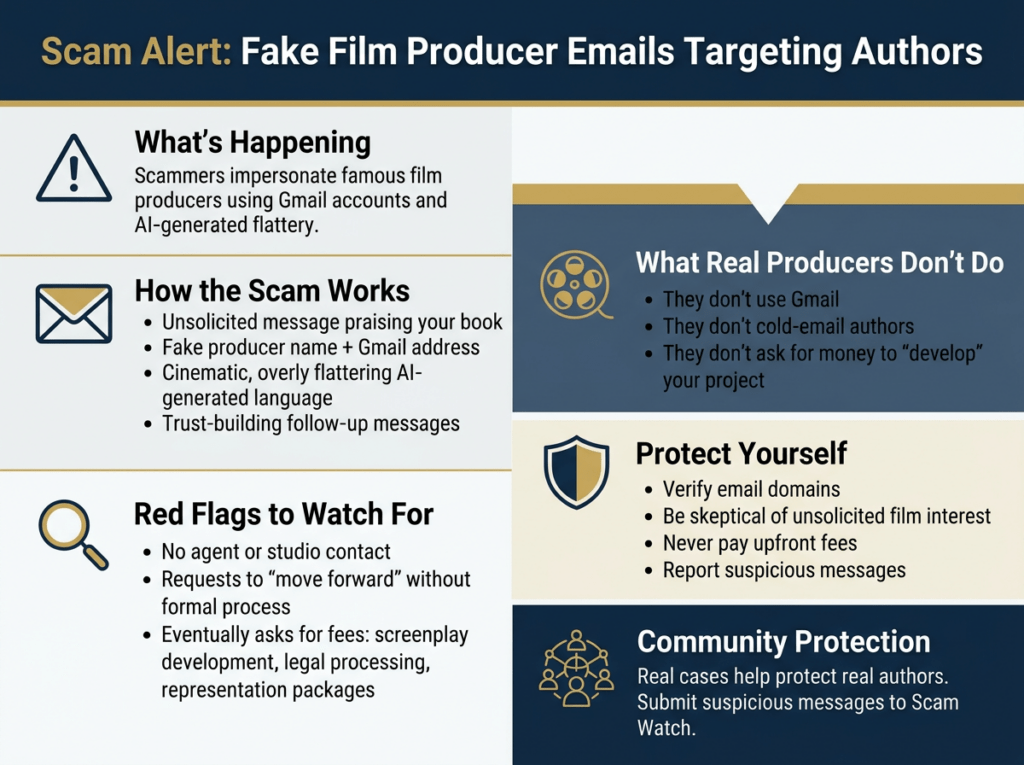
📩 The Approach: AI‑Generated Flattery and Cinematic Language
The scammer begins with a long, highly polished message praising the author’s book. The language is unmistakably AI‑generated — elaborate, cinematic, and overly complimentary. These messages often include:
- Detailed “analysis” of the book’s themes
- References to historical or cinematic qualities
- Emotional language about “possibilities” and “shared appreciation for storytelling”
- A claim that the producer was “captivated” or “struck” by the work
This is a deliberate tactic: scammers know authors are passionate about their stories, and they use flattery to lower skepticism.
🎭 The Impersonation: A Fake Producer With a Gmail Account
The scammer signs the message as David Heyman, complete with a Heyday Films signature block — but uses a Gmail address.
This alone is a red flag.
Legitimate producers do not contact authors through free email accounts. They work through agents, assistants, or studio‑managed communication channels. They do not cold‑email authors with unsolicited film interest.
🧩 The Follow‑Up: Trust‑Building and Reassurance
When the author responded with skepticism, the scammer replied with a calm, reassuring message:
- “I completely understand your caution.”
- “I’m communicating from the United Kingdom.”
- “I’d be happy to continue the conversation at a pace that feels comfortable.”
This is part of the trust‑building script used in impersonation scams. The scammer avoids pressure early on, hoping to keep the target engaged long enough to introduce the real goal: money.
💰 What Happens Next (Based on Hundreds of Cases)
Once rapport is established, these impersonators eventually pivot to:
- “Screenplay development fees”
- “Legal processing costs”
- “Representation fees”
- “Consultation packages”
- “Pitch deck creation services”
All of these are fake. All of them require payment. And none of them come from real producers.
This is the classic advance‑fee film‑option scam.
🔍 Why This Case Matters
This submission is a textbook example of the current impersonation pattern targeting authors:
- Celebrity name
- AI‑generated praise
- Gmail address
- Trust‑building tone
- Geographic reassurance
- Slow escalation toward financial requests
By sharing anonymized examples like this, we help authors recognize the signs before they get pulled into a long, emotionally manipulative exchange.
🛡️ How Authors Can Protect Themselves
- Be skeptical of unsolicited film interest.
- Verify email domains — real producers don’t use Gmail.
- Look for AI‑generated language (overly cinematic, overly flattering).
- Never pay for screenplay development or “representation packages.”
- Report suspicious messages to scam‑prevention communities.
If a producer is genuinely interested in your work, the contact will come through your agent, your publisher, or a verified studio representative — never through a random Gmail account.
📢 Want Your Experience to Help Others?
If you’ve received a similar message, you can submit it through our Scam Watch reporting system. We remove all identifying information before publishing any examples.
Real cases help protect real authors.

Rae Stonehouse is a Canadian author, publisher, and advocate committed to exposing publishing scams and supporting writers through education and community. As the creator of Authors Against Scammers, Rae provides clear, practical guidance to help writers protect their work, their money, and their peace of mind. His books and resources reflect a lifelong dedication to empowering others through knowledge, clarity, and real‑world experience.