As authors, we’re used to strangers sliding into our DMs. Sometimes it’s a reader. Sometimes it’s another writer. Sometimes it’s a bot trying to sell us book‑formatting services from a Gmail address created yesterday.
And sometimes… it’s something a little different.
Recently, someone calling herself “Evelyn Sweet” followed my author account on Twitter/X and struck up a friendly conversation. Nothing unusual there — authors network all the time. She was polite, responsive, and seemed genuinely interested in chatting.
For a couple of days, I waited to see where the conversation was going. Then the motive finally revealed itself.
“i’m actually being really shy about this, but i’m looking for someone to collab with on my page… you seem like you’d be perfect for it… check my private stuff here:” (OnlyFans link)
Ah, there it is.
When I politely declined, she doubled down:
“aww come on dont be shy 😏 u get to see the real me not just the pg version lol. “
And that’s when the cautionary tale begins.
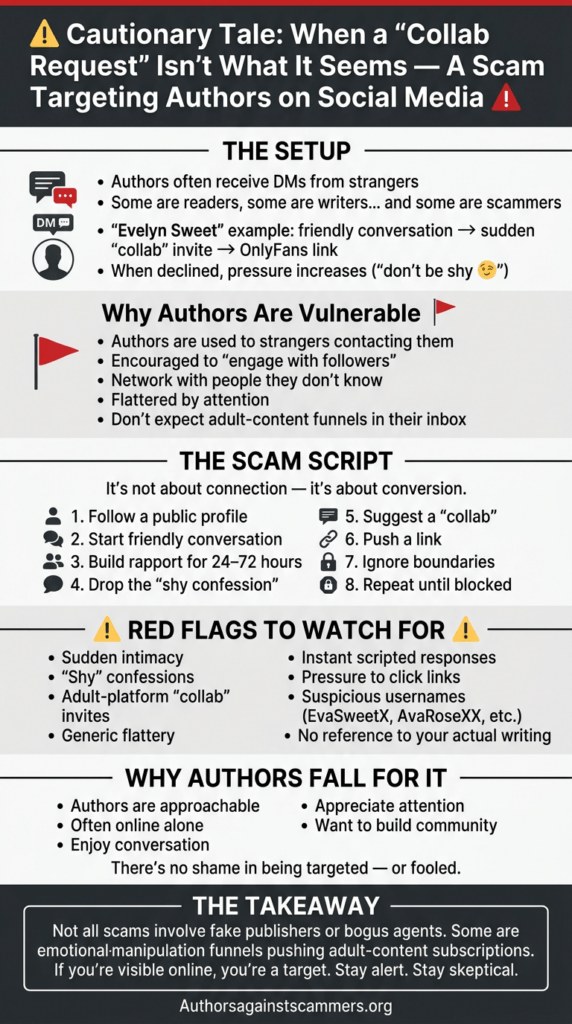
🚩 Why This Matters for Authors
Even though this wasn’t a publishing scam, it was a scam that targeted me because I’m an author with a public profile.
Authors are uniquely vulnerable to this kind of approach because:
- We’re used to strangers contacting us
- We’re encouraged to “engage with followers,”
- We often network with people we don’t know
- We’re flattered when someone shows interest
- We don’t expect adult‑content funnels in our DMs
This combination makes authors easy targets for romance‑bait → adult‑content upsell scams.
🚩 The Script Behind the Scam
The messages I received weren’t personal. They were part of a well‑known script used by:
- adult‑content marketers
- bot accounts
- stolen‑photo profiles
- AI‑generated personas
The pattern is predictable:
- Follow a public profile
- Start a friendly conversation
- Build rapport for 24–72 hours
- Drop the “shy confession”
- Suggest a “collab”
- Push a link
- Ignore boundaries
- Repeat the script until blocked
It’s not about connection.
It’s not about collaboration. It’s about conversion.
🚩 Red Flags Authors Should Watch For
If you’re an author on social media, keep an eye out for:
- sudden intimacy from a stranger
- “shy” or “nervous” confessions
- invitations to “collab” on adult platforms
- generic flattery that could apply to anyone
- instant responses that ignore what you said
- pressure to click a link
- usernames like EvaSweetX, AvaRoseXX, etc.
- no reference to your actual writing
If it feels scripted, it probably is.
🚩 Why Authors Fall for This (and Why There’s No Shame in It)
Scammers rely on the fact that authors:
- are approachable
- are often online alone
- enjoy conversation
- appreciate attention
- want to build community
There’s no shame in being targeted. There’s no shame in being fooled. There is power in recognizing the pattern.
🚩 The Takeaway
Not every scam targeting authors involves fake publishers, bogus agents, or predatory marketing services. Some are simply opportunistic attempts to funnel you toward adult‑content subscriptions using emotional manipulation and scripted charm.
If you’re an author with a public profile, you’re a target — not because you’re naïve, but because you’re visible.
Stay alert. Stay skeptical. And remember: if someone online thinks you’re “perfect for a collab,” make sure they’re talking about writing — not something else entirely.

Rae Stonehouse is a Canadian author, publisher, and advocate committed to exposing publishing scams and supporting writers through education and community. As the creator of Authors Against Scammers, Rae provides clear, practical guidance to help writers protect their work, their money, and their peace of mind. His books and resources reflect a lifelong dedication to empowering others through knowledge, clarity, and real‑world experience.