Words With Friends (WWF) is more than just a Scrabble-style mobile game—it has become a popular hunting ground for romance-style scammers. For authors, especially those with public profiles, the risks are more serious than many realize. While the scam starts casually inside the game, the tactics scammers use mirror the psychological manipulation seen in publishing scams, making writers uniquely vulnerable.
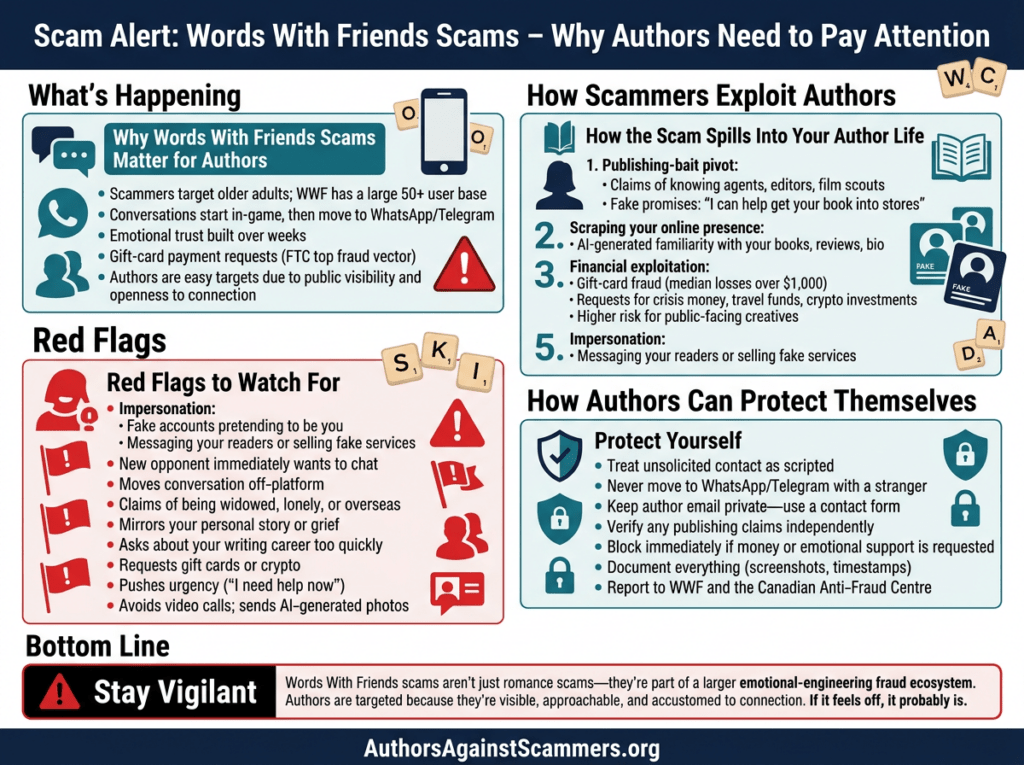
Why Words With Friends Scams Matter to Authors
Scammers target profiles that closely match the author’s demographic:
- Older adults are heavily targeted, and WWF has a large 50+ user base.
- Initial contact happens through in-game chat, then quickly moves to WhatsApp or Telegram—the same channels used in publishing impersonation scams.
- Emotional trust is built over weeks, mirroring the “bonding phase” used in romance bait publishing scams.
- Requests for untraceable payments via gift cards are a top fraud vector, according to the FTC.
Authors are especially at risk because:
- You’re used to strangers contacting you.
- You’re encouraged to engage with readers and followers.
- You often network with people you don’t know.
- You’re accustomed to flattery and attention as part of your professional ecosystem.
- Scammers can easily find your public profile and pivot the scam toward your author identity.
How a Words with Friends Scam Can Spill Into Your Author Life
Once a scammer identifies you as an author, several things can happen:
- Pivot from romance bait to publishing bait
Scammers may impersonate agents, editors, or film scouts, claiming:- “I know someone in publishing.”
- “I can help you get your book into stores.”
- “My cousin works at Penguin.”
This mirrors impersonation scams documented by the WGGB and the Society of Authors.
- Scrape your online presence
Scammers use AI to scrape your reviews, bios, and book listings to sound credible. - Escalate into financial exploitation
Gift card fraud is common, with median losses over $1,000. Once they know you’re an author, they may:- Ask for “help with a crisis.”
- Request money for “travel to meet you.”
- Push crypto or investment scams.
- Attempt identity theft using your public details.
- Attempt sextortion
Authors with public profiles are at higher risk because their reputations matter. - Impersonate you
Scammers can create fake accounts pretending to be you, message your readers, attempt to sell fake services under your name, or damage your reputation.
Red Flags to Watch For
- A new opponent immediately wants to chat.
- They move the conversation off platform.
- They claim to be widowed, lonely, or stationed overseas.
- They mirror your personal story or grief.
- They ask about your writing career too quickly.
- They request gift cards or cryptocurrency.
- They push urgency (“I need help now”).
- They avoid video calls or send AI-generated photos.
How Authors Can Protect Themselves
- Treat any unsolicited contact as potentially scripted.
- Never move to WhatsApp/Telegram with a stranger from a game.
- Keep your author email private—use a contact form instead.
- If someone claims publishing connections, verify independently.
- Block immediately if they ask for money or emotional support.
- Document everything if the scam escalates (screenshots, timestamps).
- Report the scam to the game platform and the Canadian Anti-Fraud Centre.
Bottom Line
Words With Friends scams aren’t just a “romance scam problem.” They’re part of a broader ecosystem of emotional engineering fraud—and authors, because of their public visibility and openness to connection, are disproportionately at risk. Stay vigilant, and remember: if it feels off, it probably is.
“Even if you’re not an author, these tactics are used in business, online marketplaces, and personal interactions. Understanding them helps you make safer decisions in life and work.”

Rae Stonehouse is a Canadian author, publisher, and advocate committed to exposing publishing scams and supporting writers through education and community. As the creator of Authors Against Scammers, Rae provides clear, practical guidance to help writers protect their work, their money, and their peace of mind. His books and resources reflect a lifelong dedication to empowering others through knowledge, clarity, and real‑world experience.