Hey, fellow authors and creatives—welcome to the Authors Against Scammers blog. If you’ve ever felt that rush of excitement from an unexpected message promising publication, a film deal, or big-time recognition, you’re not alone. Scammers are masters at hijacking our dreams, using tactics eerily similar to those in romance scams. The good news? Understanding these parallels empowers you to spot them early and protect your work. In this post, we’ll break it down step by step, so you can navigate opportunities with confidence. Remember: scammers prey on hope, not on any flaw in you. You’re part of a strong community here to support each other.
Why This Matters: Authors Are Prime Targets for Emotional Manipulation
Authors, freelancers, and creatives pour their hearts into their work, making us especially vulnerable to scammers who exploit that passion. Just like “lonely hearts” seeking connection in romance scams, we crave validation—praise for our stories, the thrill of a breakthrough deal. Scammers know this and weaponize it with flattery like, “Your book is a masterpiece—we’ve been searching for talent like yours.”
They thrive on our industry inexperience, too. The publishing world is a maze of agents, small presses, and international rights deals, full of confusing jargon. Add emotional investment, and it’s easy to overlook red flags amid the excitement.
The consequences? Heartbreaking. Victims lose thousands in “fees,” face stolen manuscripts, damaged reputations, or even drained savings. But here’s the truth: these aren’t isolated slip-ups. Scammers are professionals targeting dreamers everywhere—from romance seekers to aspiring authors. You’re not naive; you’re human. And knowledge is your shield.
How the Scam Works: A Step-by-Step Breakdown
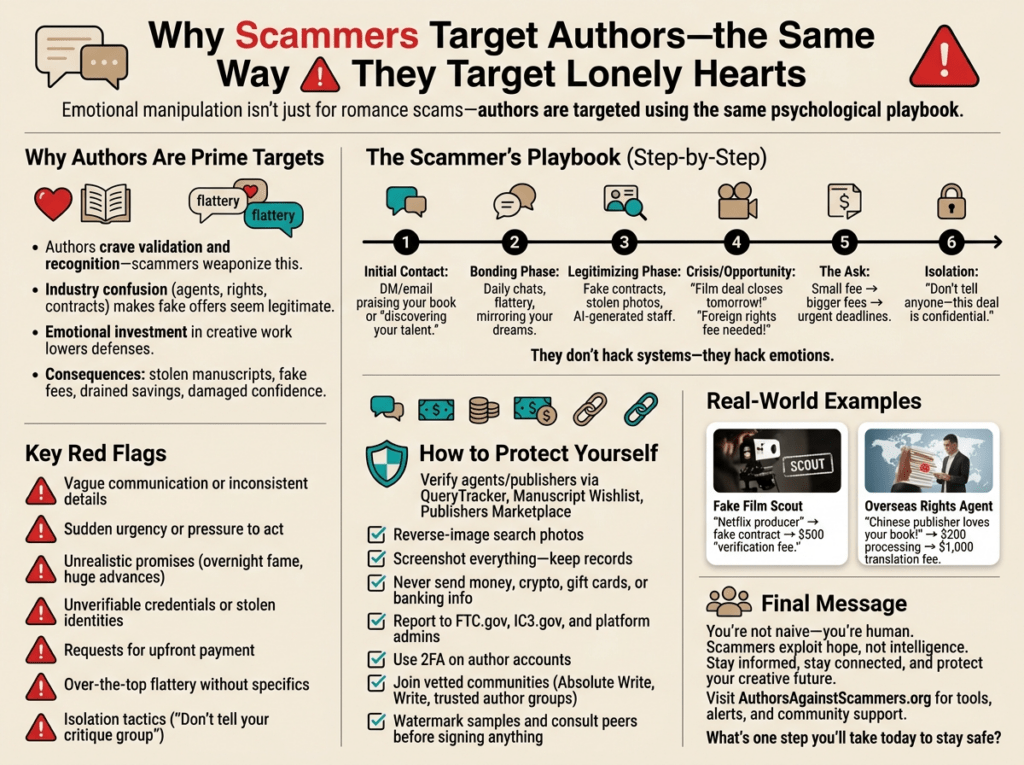
Scammers don’t hack systems; they hack emotions. Romance scams build fake love; author scams build fake professional partnerships. Both follow a predictable playbook, relying on psychological tactics like future-faking (promising a bright shared horizon) and mirroring (echoing your tone, dreams, and values).
The Scammer’s Process
- Initial Contact: A DM, email, or social media message from a “scout,” “agent,” or “producer.” It starts innocently: “Loved your book on [platform]. Huge potential!”
- Bonding Phase: Daily chats build “professional intimacy.” Flattery flows (“Your voice is unique!”), shared stories emerge, and they mirror your enthusiasm for indie publishing or film adaptations.
- Legitimizing Phase: Fake proofs arrive—stolen agent photos, AI-generated staff headshots, forged contracts, or websites mimicking real publishers.
- Crisis or Opportunity: Enter the hook. A “film deal closing tomorrow,” “foreign rights sale needing verification,” or “emergency customs fee for your advance.”
- The Ask: Small at first (“$100 processing fee”), escalating via foot-in-the-door (“Now $800 for taxes”). Urgency overrides doubt: “Sign now or lose it!”
- Isolation and Extraction: “Don’t tell your critique group—it could leak.” They vanish after payouts, leaving you isolated.
Common patterns? Hope as the hook (your big break), urgency as the kill switch (“Deal expires today!”), and slow escalation from tiny asks to thousands.
Key Red Flags: Spot the Manipulation Early
Trust your gut—these signs scream scam:
- Vague Communication: Dodgy grammar, inconsistent details, or reluctance to hop on a video call.
- Pressure Tactics and Sudden Urgency: “Act now or miss out!” No legitimate deal rushes you.
- Unrealistic Promises: Overnight fame, massive advances without query letters, or “guaranteed” film options.
- Unverifiable Credentials: Google their name—real agents have track records; fakes use stolen identities.
- Requests for Upfront Payment: Legitimate pros earn commissions post-sale, never demand fees first.
- Isolation Warnings: “Keep this confidential to protect the deal.”
- Over-the-Top Flattery Without Substance: Praise your “genius” but skip specifics about your work.
Practical Guidance: Actionable Steps to Stay Safe
You’re not powerless—here’s how to verify, respond, and protect yourself:
- Verify Legitimacy: Reverse-image search photos (via Google or TinEye). Check sites like QueryTracker, Manuscript Wishlist, or Publishers Marketplace for real agents. Call the “publisher” from their official site—never the scammer’s link.
- Document Everything: Screenshot messages, contracts, and payment requests. Note dates, names, and IP details if possible.
- Respond Safely: Politely stall (“I’ll consult my agent”). Never send money, gift cards, crypto, or bank information. Report to platforms (e.g., Twitter/X, Facebook) and authorities like FTC.gov or IC3.gov.
- What Not to Do: Don’t wire money, share manuscripts freely, or confront aggressively (they’ll ghost anyway). Avoid “testing” by sending small amounts—it escalates.
- Future Protection: Use two-factor authentication on author accounts. Join vetted communities like Absolute Write forums. Watermark samples. Build a network of trusted peers for second opinions.
Real-World Scenarios: How It Unfolds for Authors
Scenario 1: The Fake Film Scout
Sarah gets a LinkedIn DM: “I’m a producer scouting for Netflix. Your thriller is perfect!” Weeks of chats, a fake contract, then: “Pay $500 for rights verification—deal closes Friday!” She spots the urgency, Googles the “studio,” and reports it.
Scenario 2: The Overseas Rights “Agent”
Mike’s fantasy novel draws an email from a “London agent”: “Chinese publisher loves it! Send $200 for contract processing.” Escalation follows: “$1,000 for translation.” He verifies—no such agent exists.
These are composites from real reports. Scammers adapt, but the emotional pull stays the same.
You’re Not Alone—Take Control Today
Scammers succeed because they exploit universal hopes, not because victims “should have known better.” Romance scam survivors and authors alike feel shame, but that’s the scammer’s final weapon. Here, we validate you: you’ve created something amazing, and pros respect that without games.
Ready to level up? Dive deeper into resources on AuthorsAgainstScammers.org—check our scam evaluation toolkit, latest alerts, and community stories. Stay informed, share your wins, and let’s keep the dream-chasers safe. You’ve got this. What’s one step you’ll take today? Drop it in the comments—we’re listening.

Rae Stonehouse is a Canadian author, publisher, and advocate committed to exposing publishing scams and supporting writers through education and community. As the creator of Authors Against Scammers, Rae provides clear, practical guidance to help writers protect their work, their money, and their peace of mind. His books and resources reflect a lifelong dedication to empowering others through knowledge, clarity, and real‑world experience.