
How to Document Evidence for a Dispute: Protecting Yourself from Marketing Scams
When you’re navigating the world of author marketing and promotion, most interactions go smoothly. But occasionally, you’ll encounter an offer that doesn’t feel quite right, or worse, you’ll find yourself dealing with what appears to be an outright scam. In these situations, one of your most powerful tools isn’t confrontation or anger—it’s documentation.
Proper evidence collection can mean the difference between successfully recovering your money and being left with nothing but frustration. Whether you’re preparing to file a dispute with your bank, seeking a refund through PayPal or another payment processor, or reporting a fraudulent operator to a platform like Facebook or Instagram, having your documentation organized and complete dramatically increases your chances of a favorable outcome.
This article walks you through the essential elements of building a strong evidence file, from knowing what to save to organizing it effectively. While we’ll cover the fundamentals here, authors looking for deeper guidance—including real-world examples, dispute letter templates, and detailed strategies—can find comprehensive information in The Nancy Catherine Scammer Playbook Exposed.
Understanding Why Documentation Matters
Before we dive into the specifics, it’s worth understanding why documentation carries so much weight. When you file a dispute with your credit card company or payment processor, you’re essentially making a claim that a service provider failed to deliver what they promised. The company handling your dispute isn’t interested in your feelings about the situation or vague complaints. They want concrete evidence that shows a clear discrepancy between what was offered and what was delivered.
The same principle applies when reporting someone to a social media platform or a consumer protection agency. These organizations process countless reports, and the ones that result in action are almost always the ones backed by clear, organized evidence. Your documentation transforms your complaint from “someone wronged me” into “here is proof of fraudulent behavior.”
What Evidence You Need to Collect
Building a comprehensive evidence file means capturing multiple types of information. Each category serves a specific purpose in demonstrating what went wrong and when.
Written Communication
Every exchange you have with a marketing provider should be preserved. This includes all emails, direct messages on social media platforms, text messages, and chat transcripts from any platform where you communicated. These conversations often contain the initial promises, your questions about services, their responses, and any shifting explanations when things go wrong.
Don’t overlook screenshots as a method of preserving this communication. While forwarding an email is straightforward, conversations on platforms like Instagram, Facebook Messenger, or WhatsApp are best captured as screenshots. Take multiple screenshots if a conversation is lengthy, ensuring you capture timestamps and usernames. If a scammer deletes their account or blocks you, these screenshots may be your only proof that the conversation ever happened.
Visual Records from Websites and Social Media
The digital nature of most marketing scams means that evidence can disappear in an instant. A website can be taken offline, social media posts can be deleted, and advertisements can vanish once you’ve clicked through. This makes it crucial to capture screenshots of everything relevant while it’s still available.
Save images of the website pages where services were described, particularly any pages outlining deliverables, timelines, or guarantees. Capture social media posts promoting the service, especially those containing specific promises about results. If you clicked on an advertisement, screenshot it if possible. Most importantly, save your payment confirmation screens and any receipts or invoices provided after payment.
Transaction Records
Your financial records form the backbone of any dispute. These documents prove that money changed hands and establish the timeline of your business relationship. Collect all receipts and invoices related to the transaction, regardless of how informal they may seem. Save the relevant portions of your bank or credit card statements showing the charges. If you made multiple payments, document each one separately.
If you attempted to request a refund at any point, preserve records of that attempt. This might include emails requesting a refund, screenshots of refund request forms you submitted, or notes about phone calls where you asked for your money back. These attempts demonstrate that you tried to resolve the issue directly before escalating to a formal dispute.
Service Descriptions and Agreements
Many scams rely on vague promises that can later be reinterpreted or denied. Combat this by saving detailed records of what was actually promised. Screenshot any pages or documents describing the deliverables you were supposed to receive. If you signed a contract or agreement—even an informal one sent via email—save multiple copies. Preserve any written promises or guarantees, particularly those related to timelines, specific results, or quality standards.
Pay special attention to any promises that seem too good to be true. These are often the very claims that get walked back or explained away later, and having them documented becomes crucial when you’re building your case.
Timeline Documentation
Disputes often hinge on demonstrating a pattern of behavior or showing that deadlines were repeatedly missed. Create and maintain a simple timeline that tracks the key dates in your relationship with the service provider. Note when you first made contact, when you made each payment, when deliverables were supposed to be provided, and when those deadlines passed without delivery. If you made multiple attempts to follow up or escalate the issue, document those dates as well.
This timeline doesn’t need to be elaborate. A simple text document or spreadsheet listing dates and brief descriptions of what happened can be remarkably effective at showing a pattern of broken promises or evasive behavior.
Organizing Your Evidence Effectively
Collecting evidence is only half the battle. How you organize that evidence determines how useful it will be when you need it. A chaotic collection of screenshots and emails is far less persuasive than a well-organized evidence package that tells a clear story.
Creating a Dedicated Folder Structure
Start by creating a dedicated folder on your computer for each dispute or questionable business relationship. Within that main folder, create subfolders for different types of evidence. You might have separate folders for emails, screenshots, contracts and agreements, and financial documents. This structure makes it easy to locate specific pieces of evidence quickly and ensures nothing gets lost in a jumble of files.
If you’re dealing with multiple suspicious providers or have several ongoing situations, create a separate main folder for each one. Don’t mix evidence from different disputes together, as this can lead to confusion and make it harder to present a clear case for any single situation.
Using Clear File Names
When you save a screenshot or document, take a moment to give it a meaningful filename. Include the date using a format like “2025-03-12” (year-month-day) so files sort chronologically. Add a brief description of what the file contains. For example, “2025-03-12_InitialServiceOffer.png” or “2025-04-15_RefundRequest.pdf” tells you at a glance what you’re looking at.
This naming convention might seem tedious at first, but it pays enormous dividends when you’re preparing a dispute and need to quickly find that specific email where they promised results within two weeks, or that screenshot showing the original price before it changed.
Maintaining a Summary Document
As evidence accumulates, it’s easy to lose track of the overall narrative. Create a simple summary document that lists key events in chronological order. This might be a Word document or a spreadsheet with columns for the date, what happened, and which evidence files support that event. When you’re ready to file a dispute or write a complaint, this summary helps you tell a coherent story and ensures you don’t forget important details.
Your summary might include entries like “March 12, 2025: Made initial payment of $500. Evidence: payment_receipt.pdf and bank_statement_march.pdf” or “April 1, 2025: Deadline for first deliverable passed with no communication. Evidence: original_timeline.png and unanswered_emails folder.”
Backing Up Your Evidence
Digital files can be lost to computer crashes, accidental deletions, or hardware failures. Always maintain your evidence in at least two locations. The original folder on your computer should have a backup in cloud storage like Google Drive, Dropbox, or iCloud. If the situation is particularly serious, consider keeping a third copy on an external hard drive or USB drive.
This redundancy ensures that even if something happens to your computer, you won’t lose the evidence you’ve worked hard to collect. It also means you can access your evidence from multiple devices if needed.
Knowing When to Start Documentation
One of the most common mistakes people make is waiting too long to start collecting evidence. By the time they realize they’re dealing with a scam, crucial evidence has already disappeared. Understanding the early warning signs can help you begin documentation before it’s too late.
Trust Your Instincts
If something feels off about an interaction, that’s your cue to start saving everything. Maybe the provider is being vague about exactly what they’ll deliver, or their answers to your questions don’t quite add up. Perhaps their communication style shifts from professional to casual and evasive. These subtle red flags are worth noting and documenting, even if you’re not yet certain there’s a problem.
Watch for Communication Changes
Pay attention when communication becomes less specific or more evasive. If someone who initially provided detailed answers starts responding with vague reassurances or begins missing scheduled check-ins, start documenting immediately. These changes in communication pattern often precede more serious problems.
Track Missed Deadlines
The moment a promised deadline passes without delivery or explanation, begin saving everything. Capture screenshots of the original timeline, save all your follow-up messages, and document any excuses or new promises made. Even if the provider eventually delivers something, this pattern of missed deadlines may become relevant later.
Document Unusual Payment Requests
If you’re asked to pay through unusual methods, to send additional payments that weren’t part of the original agreement, or to wire money rather than using protected payment methods, treat this as a red flag and document everything surrounding these requests. Even if you don’t proceed with the payment, having records of these requests can be valuable evidence of fraudulent intent.
Building Your Protection Habits
The most effective documentation strategy is one that becomes automatic. Rather than treating evidence collection as something you do only when problems arise, develop habits that protect you in every business relationship. Take screenshots of service descriptions before making purchases, save confirmation emails immediately, and create folders for new projects as you begin them rather than waiting until issues develop.
These habits take only a few moments but can save you hours of stress and potentially hundreds or thousands of dollars if a situation goes wrong. Think of documentation as insurance—you hope you’ll never need it, but you’ll be grateful it’s there if you do.
Moving Forward with Your Evidence
Once you have your evidence collected and organized, you’re in a strong position to pursue resolution. Whether that means filing a dispute with your payment processor, reporting fraud to relevant authorities, or simply having documentation that encourages a service provider to honor their commitments, good records dramatically shift the power dynamic in your favor.
For authors ready to take the next step and learn how to use this evidence effectively—including specific strategies for different types of disputes, templates for dispute letters, and real examples of successful evidence packages—The Nancy Catherine Scammer Playbook Exposed provides the detailed guidance you need. The book transforms this foundation of good documentation into actionable steps for recovering your money and protecting other authors from similar experiences.
Remember, every piece of evidence you collect is both a shield protecting your interests and a tool for holding bad actors accountable. In a world where scammers rely on victims being unprepared, your organized documentation becomes your most powerful defense.
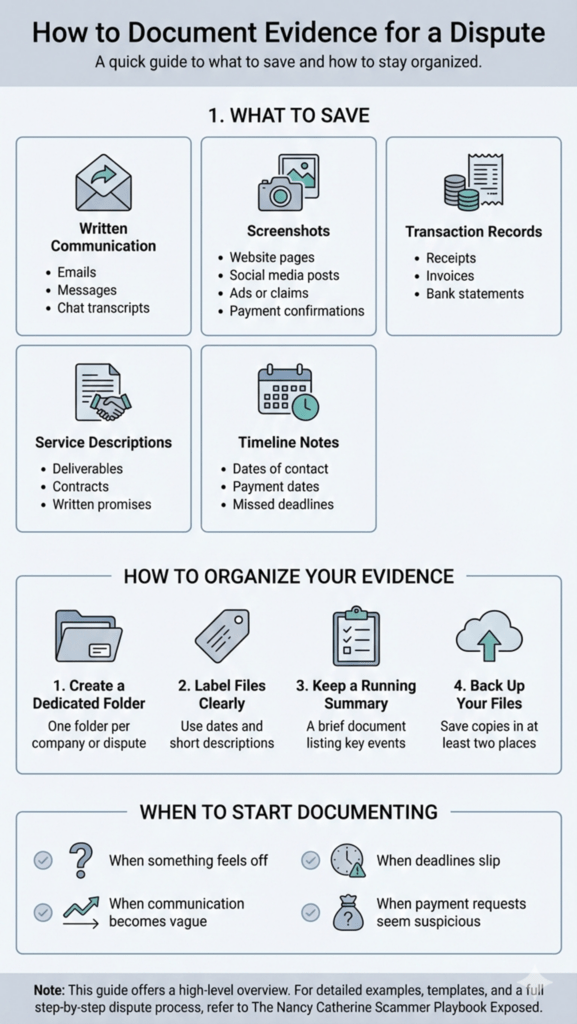
A quick‑reference guide showing authors and creatives how to collect, organize, and protect evidence during a dispute or suspected scam.

Rae Stonehouse is a Canadian author, publisher, and advocate committed to exposing publishing scams and supporting writers through education and community. As the creator of Authors Against Scammers, Rae provides clear, practical guidance to help writers protect their work, their money, and their peace of mind. His books and resources reflect a lifelong dedication to empowering others through knowledge, clarity, and real‑world experience.

0 Comments