How to Tell If a Twitter Follower Is a Scammer: A Guide for Authors and Creatives
As authors, freelancers, and creatives building our platforms on Twitter (now X), we’re no strangers to the thrill of a new follower notification. But in a space buzzing with opportunity, scammers lurk, preying on our dreams of book deals, marketing boosts, or collaborations. At Authors Against Scammers, we’re here to empower you with knowledge—not fear—so you can spot the fakes, protect your time and energy, and focus on what you do best: creating.
You’re not alone in this. Scammers target us because we hustle online, often solo, juggling writing, promotion, and business. We’ve got your back with this straightforward guide.
Why Authors Are Prime Targets for Twitter Scammers
Authors, indie publishers, and creatives are especially vulnerable on Twitter. Why? We’re passionate about our work, eager for exposure, and sometimes new to the business side of things. Scammers exploit this by posing as agents, publishers, marketers, or fans offering “life-changing” opportunities.
They thrive on confusion (vague promises of “publishing deals”), emotion (flattery like “You’re the next big thing!”), and inexperience (exploiting gaps in industry knowledge, like unfamiliarity with legitimate contract terms).
The fallout? Real-world pain: lost money from fake services, stolen personal information leading to identity theft, wasted hours chasing dead ends, or emotional drain from dashed hopes. One author we spoke with lost $500 to a “marketing expert” who vanished after payment. But remember: if you fall for it, scammers are at fault—not you. Knowledge is your shield.
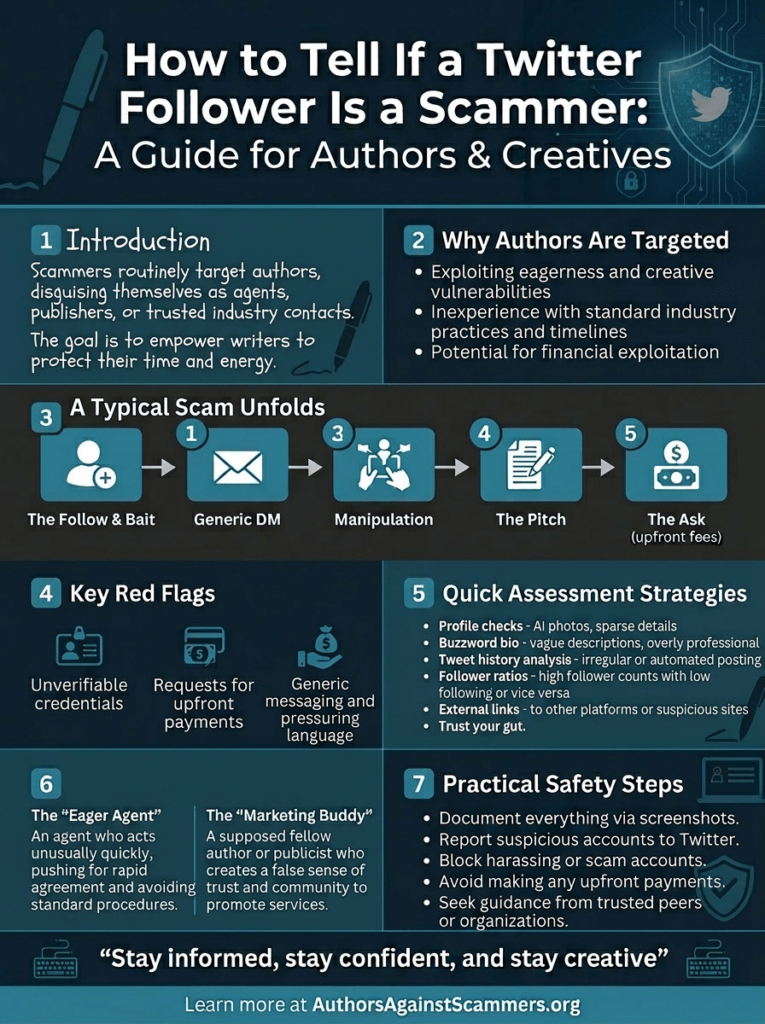
How the Scam Unfolds: Step-by-Step Breakdown
Twitter scammers follow a predictable playbook, blending social engineering with automation. Here’s how it typically goes:
- The Follow and Bait: They mass-follow authors in writing niches, using bots or low-wage workers. Your profile—books, bio, engagement—flags you as a target.
- Generic DM Opener: Immediate direct message: “Hi dear!” or “Love your books!” It’s copy-paste, sent to hundreds.
- Build Rapport with Manipulation: They use psychological tactics like reciprocity (compliments to make you respond), authority (fake credentials), and scarcity (“This deal ends soon!”). Emotional hooks play on your ambition.
- The Pitch: Unrealistic offers emerge—free promo, agent representation, or “exclusive” publishing—leading to off-platform chats (WhatsApp/Telegram) for privacy evasion.
- The Ask: Upfront fees for “processing,” “samples,” or “contracts.” Once paid, they ghost.
Common Patterns: Repetitive phrasing, language mismatches (e.g., formal English from non-native bios), and escalation from friendly to pushy.
Key Red Flags: Spot the Scammer in Seconds
Trust these indicators—they’re fast checks anyone can do. If several align, disengage.
- Vague Communication: No specifics about your work; messages like “How are you?” that fit anyone.
- Pressure Tactics: Urgency like “Reply now or miss out!” or “Limited spots.”
- Unrealistic Promises: “Guaranteed bestseller status,” or “We’ll handle everything for $99.”
- Unverifiable Credentials: “I’m a top agent” with no linked site, portfolio, or Google hits.
- Sudden Urgency: “Sign today!” without time to think.
- Requests for Upfront Payment: Legit pros get paid after delivery—never before.
- Profile/Tweet Mismatches: Generic pics, buzzword bios, no niche content (see our quick assessment strategies below).
Quick Assessment Strategies: Vet Followers Like a Pro
These simple, tool-free checks take under a minute. Empower yourself—run them on every suspicious follow.
- Check the quality of their profile
Scammers skimp here. Watch for:
- No banner or generic/AI-generated one.
- Overly polished profile picture (reverse image search via Google/TinEye).
- Bio packed with buzzwords (“#1 Publisher Helper”) but zero specifics, location, or site.
- Brand-new account (check join date).
Legitimate pros show consistent branding.
- Scrutinize Tweet History
The gold standard:
- Endless “Hi!” greetings, quotes, or bait—no originals.
- Zero replies, niche engagement, or your genre interest.
- Multi-language spam or activity bursts after silence.
Genuine accounts mix posts, interactions, and value.
- Analyze Follower/Following Ratio
- Following 10k+ with few followers back?
- Inflated counts with bot-like followers?
- No real engagement?
- Decode the First Message
Red flags: “Hi beautiful,” personal probes (“Where from?”), friend requests.
Legit: References your tweet/book/niche. - Inspect External Links
Avoid clicks on crypto, shady “services,” or chat app invites unrelated to writing. - Spot Behavioral Red Flags
- Instant DM post-follow.
- Off-platform pushes, excessive flattery, unasked offers, urgency.
- OSINT Boost (Optional)
Reverse-search photos, check usernames on WhatsMyName.app, or emails via Epieos. - Trust Your Gut
Feels off? It is. No reply owed.
Real-Life Scenarios: What It Looks Like
Scenario 1: The “Eager Agent”
New follower DMs: “Hi dear! Saw your book—I’m an agent. Exclusive deal, but send $200 processing fee via PayPal now!” Profile: Stock photo, 50 followers, tweets in broken English. Red flags: Urgency, payment ask, unverifiable.
Scenario 2: The “Marketing Buddy”
“Love your tweets! I’m a promo expert—WhatsApp me for a free trial?” Tweets: Motivational spam only. Moves off-Twitter fast. Outcome: Pitches paid “boosts” that flop.
These are composites from real reports—scammers lose when you’re vigilant.
Practical Steps: Protect Yourself and Respond Smartly
You’re in control. Here’s your action plan:
- Verify Legitimacy: Google name + “scam,” check LinkedIn/ site, ask for references. Use Query.org for Twitter intel.
- Document Everything: Screenshot profile, tweets, DMs—with dates. Report to Twitter (@Safety).
- Respond Safely (or Not): Ignore generics. If engaging, stay on Twitter, say “Email your site?” Block/move on.
- What NOT to Do: Share personal info, click links, pay anything upfront, go off-platform early.
- Future-Proof: Enable DM privacy (followers only), mute keywords, use lists for real connections. Follow @AuthorsAgainstScammers for alerts.
Stay One Step Ahead—You’ve Got This
Scammers prey on the unaware, but informed authors like you shut them down. Explore more at AuthorsAgainstScammers.org: free scam evaluators, contract checklists, and community stories. Learn to assess offers confidently and stay updated on evolving tactics. Share your wins in the comments—we’re in this together. Write on, safely! 🚀

Rae Stonehouse is a Canadian author, publisher, and advocate committed to exposing publishing scams and supporting writers through education and community. As the creator of Authors Against Scammers, Rae provides clear, practical guidance to help writers protect their work, their money, and their peace of mind. His books and resources reflect a lifelong dedication to empowering others through knowledge, clarity, and real‑world experience.
0 Comments